

970x125
Winter Wake is a strong entry from Rick Hautala, rich in chilly gray atmosphere and astute in its depiction of an isolated portion of the author’s native Maine.
Maine is of course Stephen King territory, and Hautala was sometimes known as the other Maine horror writer, but he had a style and realization of Maine that was all his own, especially in this novel from 1989.
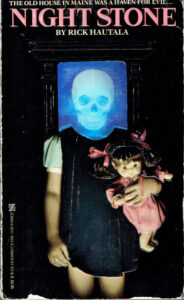
He wrote thick novels, not unusual in the Paperbacks from Hell era. His efforts earned him enough readers for a new push Zebra books was trying in the mid-1980s, the hologram cover. His Night Stone from 1986 featured a familiar Zebra cover of little girl but with a hologram that shifted from her face and an eerie stare to a skull.
Sales from that in part earned Hautala a chance to move from Zebra to Warner Books for Wake. Somewhere along the way in the late ‘80s, probably via a Horror Writers of America (now Horror Writers Association) newsletter, he offered to talk with authors about Kensington Books, the umbrella under which Zebra was stabled.

I’d just sold a novel to a refurbished Pinnacle imprint, which resided under the same roof while departing from the skeletons and other flourishes for which much of Zebra’s horror had become known.
I took him up on the offer. We had a long phone conversation, but he was happy to take the time. He told me a few soap opera-worthy tales of publishing politics.
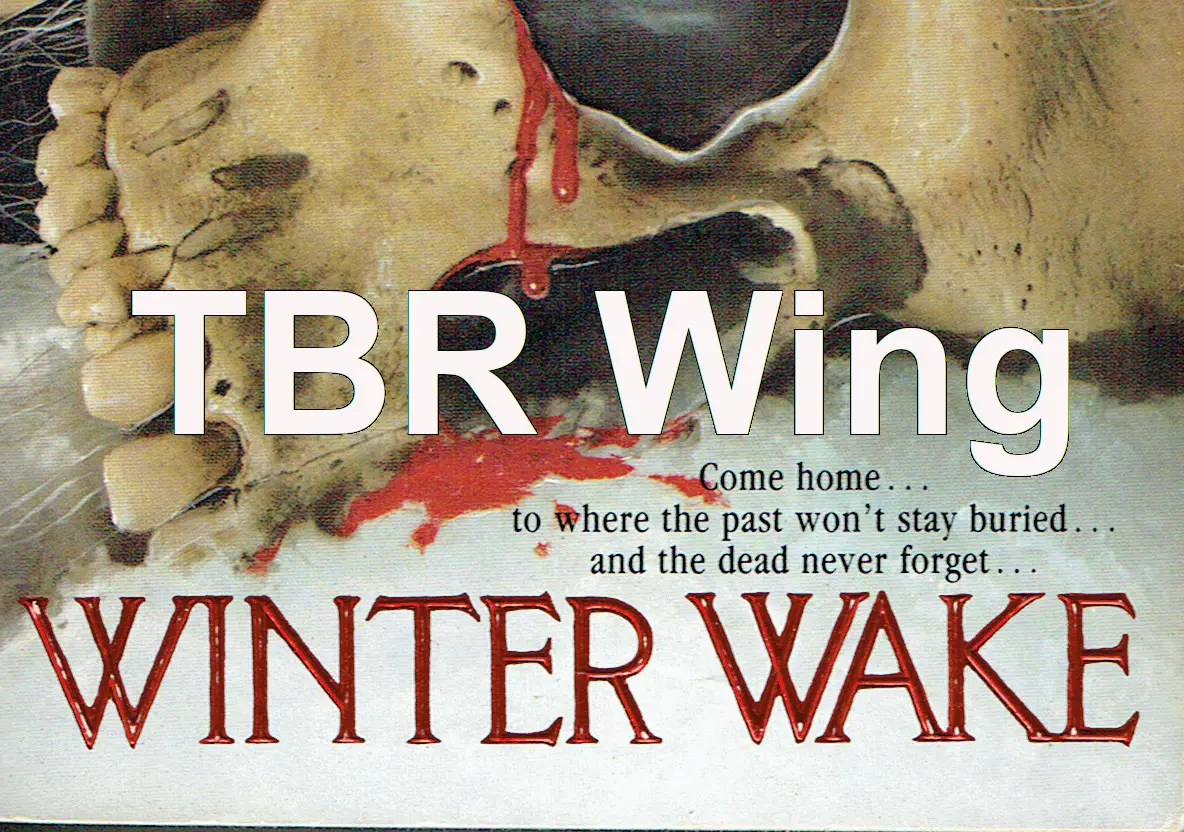
I suspect, since it was a new foot forward, he put even effort into Winter Wake. The Warner cover’s impressive in its own way, arresting yet with a touch of sophistication as it hints of the books contents with a skeletal face framed by curls of gray hair.
The novel’s an impressive reading experience, hefty at times but ultimately rewarding. The tale’s set, as mentioned, in winter on an island named Glooscap off the Maine Coast. The name is from the region though the island is fictionalized.
It’s John Carlson’s childhood home, and he and his wife Julia and her daughter move from Vermont to care for Frank, his aging and invalid father.
Bri soon has a new but mysterious friend for walks around island’s chilly landscape, and other strangeness creeps into the Carlson sphere.
To set the mood, the house is Frank’s, and it’s made from church wood, wood culled in part from a burned church and other ruined structured. Frank claims sometimes at night, organ music can still be heard.
The adults are dismissive, but as they work to modernize and refurbish the house, loud sounds at night follow as do strange messages and uncanny figures put in appearances.
Hautala strives for a rich depiction of the Carlson’s family life as John settled into a new job and Bri into a new school, and the relationship with the grumpy Frank adds tension and texture.
Readers may respond differently to the degree that’s developed, but the tale is never far from unsettling events and hints of secrets from the past.
Rest assured it’s all going somewhere.
The book’s intense final third delivers the novel’s true wallop. Hautala’s talents are fully on display as the supernatural manifests and Julia and Bri are thrown into a frenzied battle for survival.
Pages really turn the closer the reader gets to the conclusion.
Genre readers might anticipate some details, but there are still scares and surprises not to be guessed. What will be the final fate of Julia and Bri?
As mentioned, it’s a long journey, but readers ready to take in all Hautala has to offer should be rewarded.
And as for tensions and publishing politics, after a couple of books at Warner’s, Hautala returned to Zebra in 1991. As one bookseller friend who had his ear to the ground on publishing events told me, “Zebra said: `OVER HERE!’”
And they gave his return novel Cold Whisper a hologram.

