

970x125
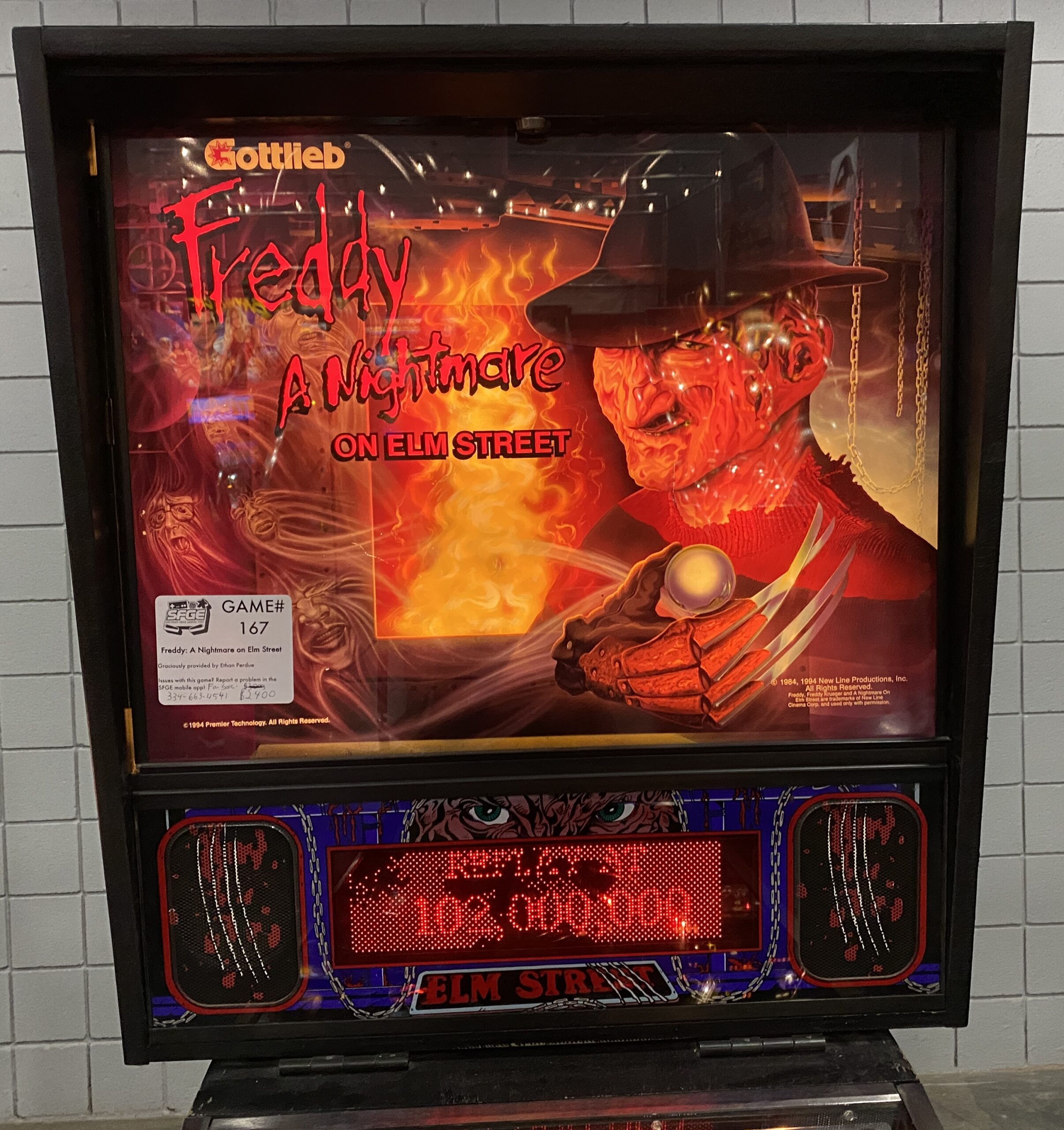
Yes, Freddy Krueger got his own pinball machine in 1994!
A tribute to the Elm Street pinball machine that haunted arcades in the ‘90s!
Pinball and horror just plain go together. We got Elvira games in the ‘80s, Tales from the Crypt pinball in the ‘90s and machines today based on everything from The Texas Chainsaw Massacre to Halloween to The Evil Dead. So it’s not a surprise to anybody that we got A Nightmare on Elm Street pinball game during the Bill Clinton years.
Pinball manufacturer Gottlieb released Freddy: A Nightmare on Elm Street in late 1994. It’s a game that kinda sorta ties into Wes Craven’s New Nightmare, but not really. Stylistically, it’s more of a “greatest hits” purée of the first six Elm Street movies and, weirdly enough, a few small carryovers from the long dormant syndicated TV series Freddy’s Nightmares. Basically, it’s a Freddy Krueger game seemingly made by people who knew what Elm Street was about, but didn’t really understand the greater overarching lore of the franchise. You might say this particular pinball game is a bit shallow and (overly)-dependent on aesthetics, but man, does it NAIL the gimmicky parts with 110 percent accuracy.
You really can’t talk about the game without talking about the time it was released. By late 1994, old Fred was hardly what you’d call a pop cultural sensation anymore. In some ways, seeing an Elm Street pinball game come out the same year Pulp Fiction was released and Kurt Cobain died almost feels like a rip in the space-time continuum. Like, imagine somebody making a “Gangnam Style” pinball game this year — that’s pretty much the level of cultural outdatedness we’re talking here. Then again, we got A Creature From The Black Lagoon pinball game two years before this one came out … not that we should expect the pinball industry to be on the cutting edge of popular tastes in the first place.
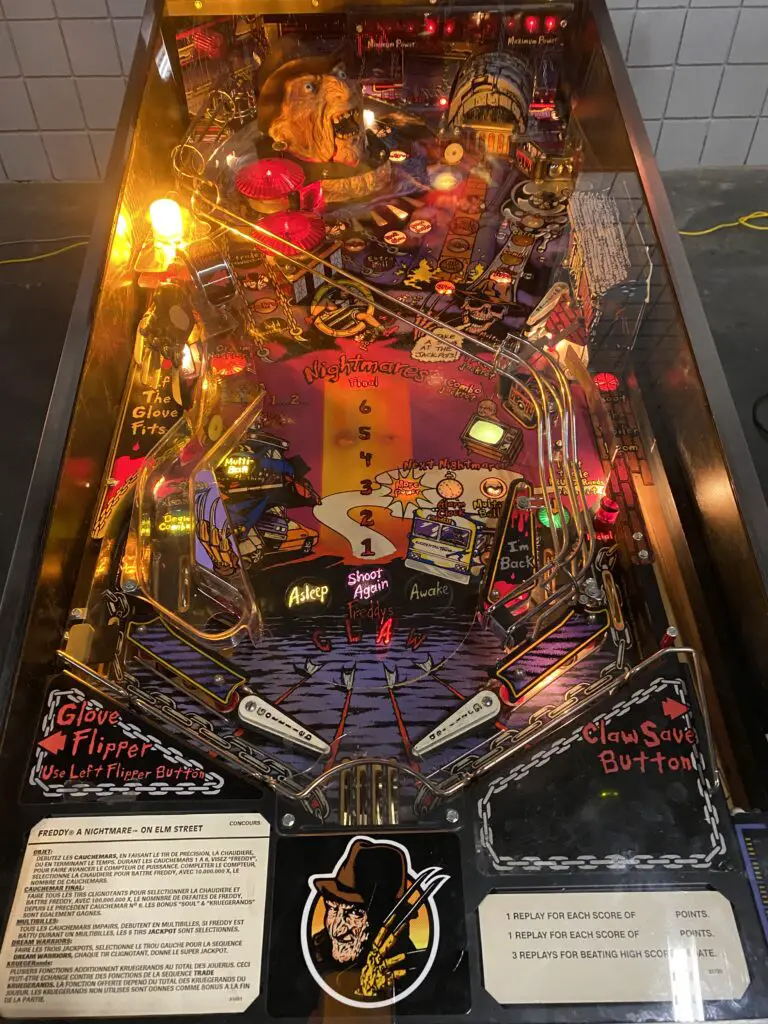

If you’re a hardcore Freddy fan, though, this machine will NOT disappoint you. Easily the coolest thing about the game is that they actually shelled out the cash to hire Robert Englund to do some all new voice work. It would’ve been so easy for them to have just paid an intern $20 to do a bad Freddy impersonation, yet Gottlieb did the economically and morally right thing and didn’t even attempt to imitate the inimitable. Hearing Rob talk MAD trash to in character you while you’re playing the game is just fantastic stuff and reason alone to give this thing a play at least once before you die.
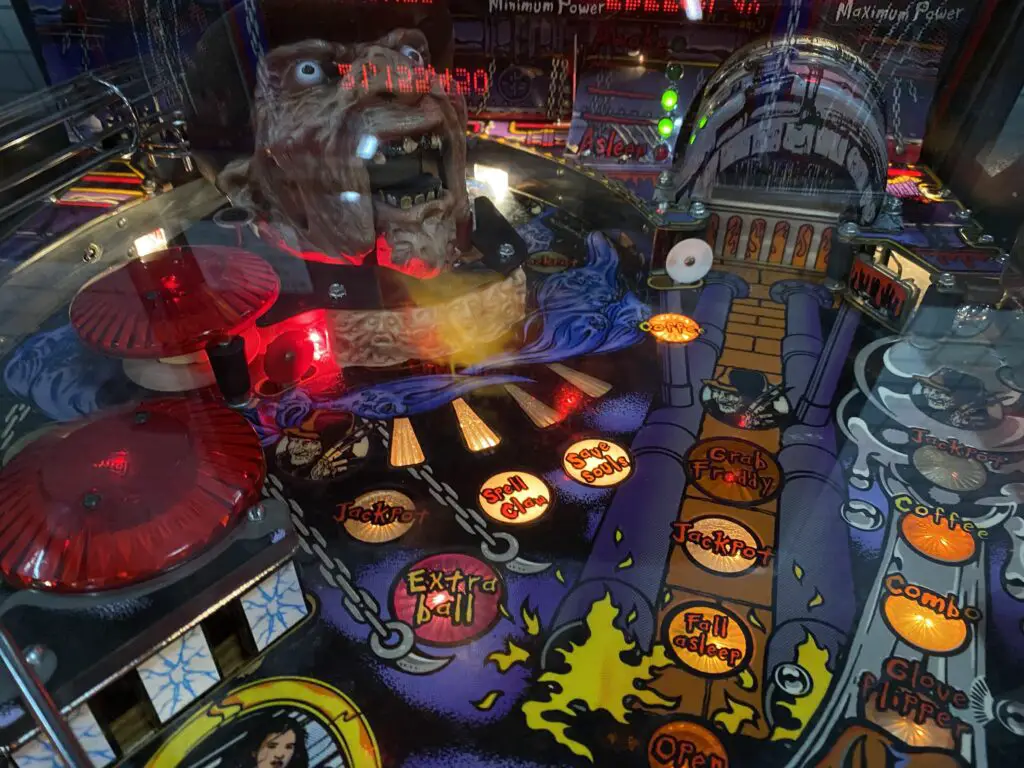
As for the rest of the game, Gottlieb definitely got as much mileage out of the license as they could. Not only does the game sport a giant, talking facsimile of Freddy’s head as the centerpiece of the table, it also includes a massive (and massively unwieldy) extra flipper in the shape of Krueger’s notorious razor glove. There’s even an extra button on the side of the table that allows you to pop a few knife-fingers between the flippers and save a ball from sinking down the drain. They’re all great little touches, even if you do have to question their efficiency and utility every now and then.
The table artwork is a mixed bag. You’d think a Freddy pinball game would exploit the whole red-green color scheme for all its worth but no, the dominant color of this machine is purple — for whatever reason. You get a lot of neat little touches depicting recurring elements of the series (i.e., the jump rope girls, the boiler room furnace, etc.) and some pieces that are ultra-specific to a particular movie (i.e., the Freddy TV set from Dream Warriors and the runaway bus from Freddy’s Dead.) Other aspects, though, are kinda generic and don’t really seem to fit the whole Elm Street vibe at all. Like, was there ever a scene in any Elm Street film where Nancy fell into a puddle of black goo, or a generic death’s head skull sported a Freddy fedora for no discernible reason whatsoever?
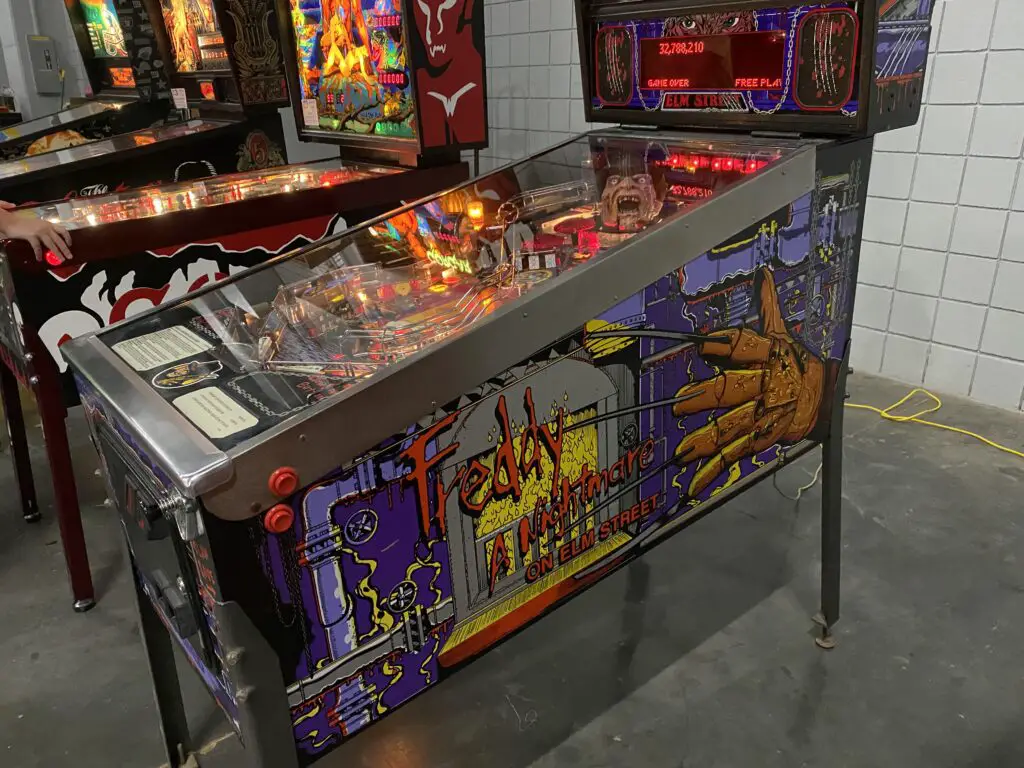
The digital scoreboard screen is pretty rad, though. Throughout the game little split second sequences from the movies will play, in this surreal and fittingly creepy dichromatic red and black. Like, you’ll see the part in Dream Child where that one Ducky from Sixteen Candles wannabe shoots his comic book gun at Freddy and a few sequences of Kincaid leaping out of bed all sweaty and terrified. It’s a little goofy and low resolution, but that just adds to the charm and creepy factor.
Of course there’s an elaborate and hard to follow rule set for the game that 99 percent of the people who play this game will simply choose to ignore. I don’t know, it’s something about hitting ramp shots and dinging bells in a certain pattern to score virtual “coffee” to stay awake, and by completing challenges you “rescue souls” and can technically “beat” the game and slay Freddy if you achieve enough points. Most people, though, are going to be more than content just slapping the ball around at random and waiting for Freddy to drop another one-liner. And yeah, it’s an enjoyable experience either way.
The music is really good and even includes a slight variation of the iconic Elm Street suite. The sound font for ‘90s pinball games are SO incredibly idiosyncratic and nothing else out there in any type of media really fits as a one-to-one comparison. Again, it’s the lack of quality to the sound that makes it stand out and feel so effective. There’s a lot of reverb and overdrive and brassy pings, and really, that fits perfectly within the Elm Street mythos. I mean, Freddy’s Dead, for sure.
I’m not really sure how the “replay value” of this game stands up against its contemporaries. The ‘90s were pretty much the ‘80s horror equivalent for pinball, in the sense that you had all time greats coming out one after the other. Even compared to other horror-themed pinball games of the era I can’t say that Freddy necessarily measures up to The Addams Family or The Twilight Zone — both of which are usually regarded as the twin ‘90s goats of pinball tables.
But the game definitely has ample ephemera appeal. It’s an ultra-thick, slow-drip shot of nostalgia on top of nostalgia, made even better because it’s a product literally teetering in the shadow realms between seismic shifts in two different industries. After all, we didn’t get a Scream pinball machine in 1997, did we?
By the way, the Internet tells me less than 3,000 of these machines were ever mass manufactured back in the day. Which means a.) your odds of seeing one out in the wild and in working condition now is pretty much zero and b.) if you do have one that still works, it’s probably worth an absurd amount of money. Regardless, it’s easily one of the neatest pieces of Elm Street merchandise ever made — yes, even if they did leave out a mini-game where you yanked a suicidal teenager’s veins out and chucked him off the top of a tall building. How did that overlook that one?

