

970x125
For decades, medicine has been dominated by a “fix-it-when-it-breaks” mentality. We wait for disease to appear, then react. But when the machinery in question is the only body you’ll ever have, waiting until failure is both risky and costly. A better way forward, what I call healthspan medicine, is proactive, preventive, and personal.
The Intersection of Psychology and Biology
Healthspan medicine blends advances in diagnostics, geroscience, systems biology, and artificial intelligence with a clear-eyed recognition that our biology is deeply influenced by our psychology. Stress, social connection, optimism, and purpose are not abstract “nice-to-haves”, they alter our hormones, immune function, and even our gene expression. We now know that psychological well-being can shape epigenetic marks on our DNA, influencing how quickly or slowly we age. In other words, your thoughts and relationships can literally write themselves into your biology.
Over the past two decades, geroscience has revealed several molecular hallmarks of aging, along with interventions – from nutrition and exercise to pharmaceuticals – that can slow or modulate these processes. Aging clocks, while still in their scientific infancy, are opening new windows into how environment, lifestyle, and mindset intersect with aging at the molecular level. The ability to accurately estimate biological age, or even more usefully the rate of biological aging, will likely be a cornerstone of future health optimization.
The longevity space is evolving rapidly. Ten years ago, most conversations were confined to research labs and speculative media stories. Today, the field is expanding, sometimes too quickly, into clinics, startups, and even direct-to-consumer marketplaces. This creates both opportunity and risk. Without standards, we risk letting hype outpace evidence. But with the right guardrails – shared best practices, ethical commitments, and ongoing scientific validation – healthspan medicine can move from niche interest to a cornerstone of modern healthcare.
The ultimate goal is simple but profound: longer lives that are worth living. We should strive to remain vital, engaged, and fulfilling at every stage of life. And the science tells us that goal is not only possible, but increasingly within reach if we’re willing to change how we think about, measure, and care for our health, body and mind alike.
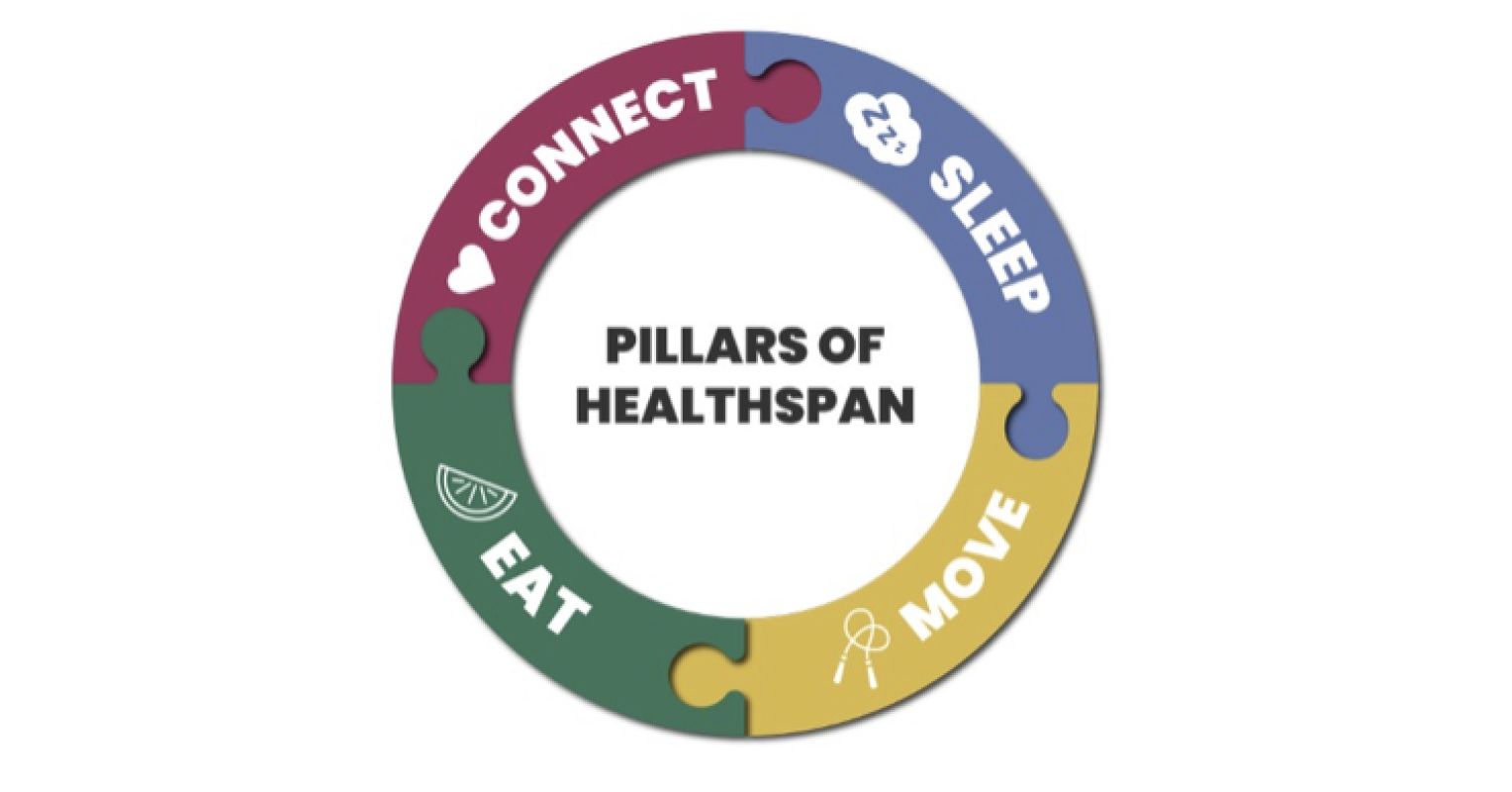
The Pillars of Healthspan
Mindfulness, mental health, and meaningful social connection are equal in importance with nutrition, physical activity, and sleep quality. That’s why “connect” is a designated pillar of healthspan. Strengthening your connect pillar doesn’t just feel good, is produces measurable improvements across multiple systems of health, even at the cellular level. These include:
- Stress Regulation: Regular mindfulness meditation reduces activation of the hypothalamic–pituitary–adrenal (HPA) axis, lowering cortisol and other stress hormones that accelerate biological aging.
- Immune Function: Mindfulness practices can enhance immune surveillance, increasing antibody production, cancer surveillance, and antiviral responses.
- Inflammation Control: Both mindfulness and strong social ties reduce systemic inflammation by downregulating NF-κB signaling and pro-inflammatory cytokines.
- Epigenetic Effects: Mindfulness training has been linked to beneficial changes in DNA methylation patterns, including genes related to inflammation and metabolic regulation.
- Longevity Link: Social isolation and loneliness increase all-cause mortality risk, while sustained positive social relationships correlate with better cardiovascular health, cognitive function, and survival.oufou

