

970x125
I never intended or wanted to become a doctor. It was at the very bottom of my list of possible careers.
In fact, I only went to medical school because an advisor at Amherst College told me to go, telling me psychiatrists were medical doctors, and only medical doctors could prescribe medications, which would become increasingly important in future years. So, I talked my way into Stanford, in spite of the fact that I hadn’t been a pre-med student.
My sophomore year, our lab instructor announced that today we’d be practicing drawing blood from each other’s arms and started handing out tourniquets, alcohol wipes, and needles. I’d struggled with many fears and phobias growing up, including a blood phobia. When I realized what was about to happen in our lab, I thought, “I’m out of here!” I walked out of the classroom, went straight to the dean’s office, and announced that I was dropping out of medical school.
He talked me into a year’s leave of absence instead. I bought a motorcycle from a friend and had what turned out to be a fantastic year at the height of the hippie era. I took time to learn the ways of the world on the streets of Palo Alto. It was one of the most exciting times of my life!
At the end of the year, I eventually decided to go back and finish medical school—mostly because I couldn’t think of anything better to do. I also thought I might find some kind of career path if I had my MD degree. I was a terrible medical student and did the bare minimum just to pass my classes. Medicine simply did not appeal to me.
Prior to graduation, I still didn’t want a medical career, so I didn’t bother applying for internships. I was pretty sure that no one would want me at any rate, given my poor record in medical school. I ended up with a job with a company that was raising funds for a substance abuse treatment program on the Monterey Peninsula, but my wife and I quickly ran out of money when the company folded.
We ended up briefly homeless in Carmel Valley. Eventually, a contact at Stanford pointed me to Highland Hospital in Oakland—a county hospital that, in his words, would “take any warm body,” since they hadn’t filled one of their internship slots. I explained that I had skipped most of my classes, and didn’t even know how to use a stethoscope or read X-rays or EKGs.
They actually offered me something better than just an internship position. They said I could start a month early and work in the emergency room, twelve hours on and twelve off, seven days a week, and sleep in the hospital. “We’ll make a doctor out of you,” they said. “You’ll be surprised how much you can learn working in the emergency room here at Highland.”
The Bomber in Bay Three
My first shift started quietly enough. Pneumonia cases. A man in alcohol withdrawal was hallucinating and agitated. It was a super-busy ER, but no blood. I thought I might make it through the day.
Then I heard sirens approaching the hospital, and froze up.
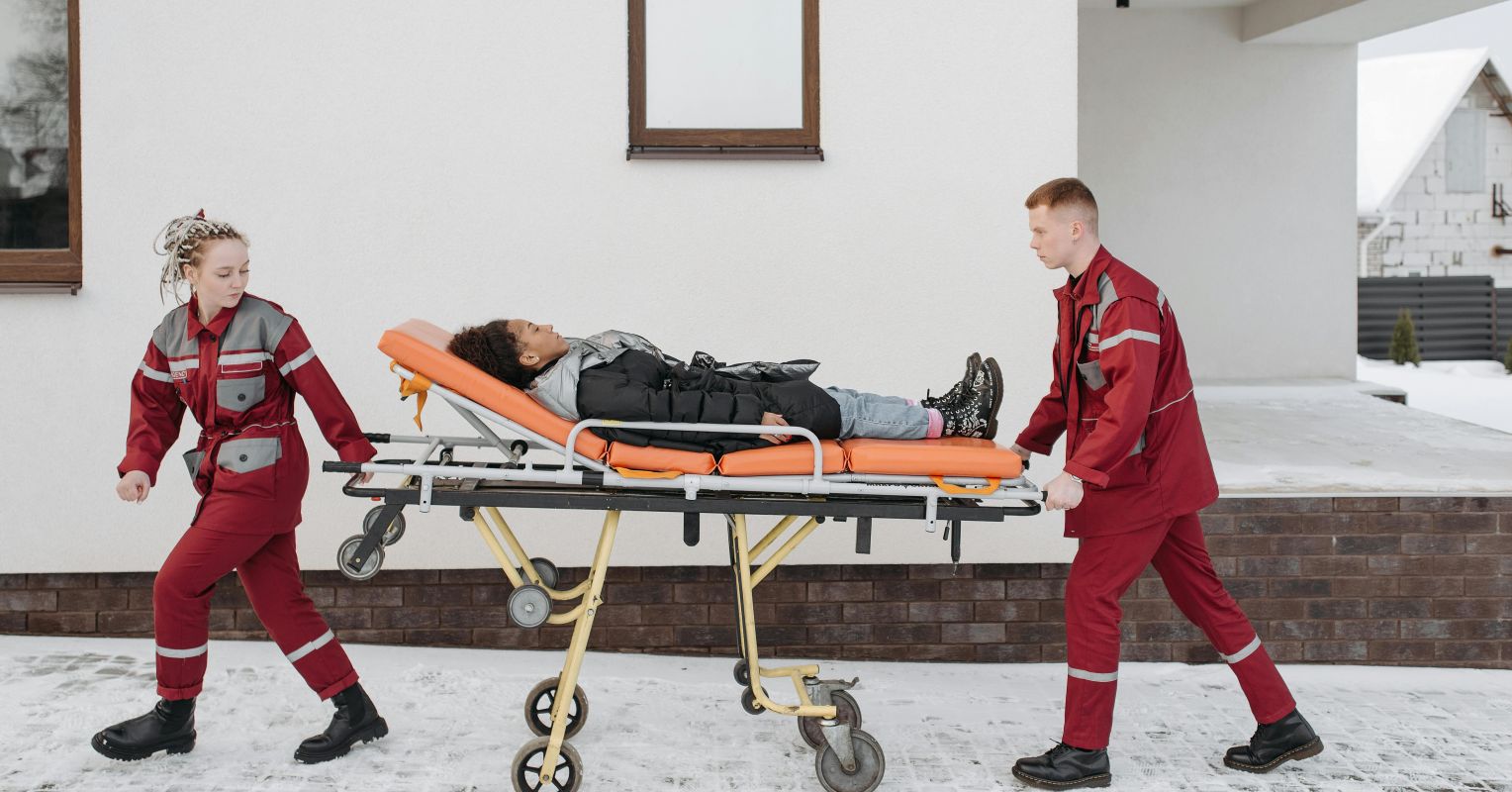
Moments later, police and medics came running down the hallway, pushing a gurney towards the major trauma room. The man on the gurney was completely covered in blood.
A nurse grabbed me. She pulled me to the trauma room door. Six doctors and nurses surrounded the patient, pushing IV lines into both arms and both legs using large-bore needles, and squeezing fluid into him with blood pressure cuffs to prevent shock.
The man, she explained, had been building a bomb intended for City Hall. It had detonated in his basement while he was working on it.
She said, “You’ve got to help.”
I protested, “I don’t actually know much at all. What exactly did you want me to do?”
She handed me a toothbrush and said, “Get busy with this!”
I asked, “Did you want me to brush his teeth or something? Does he have horrible breath?”
She said, “No, stupid,” and pulled me right up next to the body. “Can you see those black specks in his tissue? That’s gunpowder. If someone doesn’t get it out, he’ll die of poisoning. Get busy with your toothbrush!”
I stood there with my anxiety at 100 on a 0-to-100 scale—confronting the very thing I’d been afraid of my entire life. There was no escape. I couldn’t avoid the blood or make excuses any longer. I had to reach in and start working with my hands on his bloody tissue.
Fortunately, he was in a coma. If he had been conscious, the pain would have been unbearable.
The Monster Has No Teeth
For fifteen minutes, my anxiety stayed maxed out. No improvement. But I gutted it out.
And then I found myself thinking: “Highland Hospital is just a county hospital. But they seem to be better than the doctors at Stanford, because they see many rare cases every day and have nearly 10,000 major trauma cases per month. They’ve seen it all!
And I realized I was a small part of this extraordinary team. I also realized that we were probably going to save this man’s life.
And as those thoughts went through my head, my fear of blood evaporated. What replaced it was euphoria. That month at Highland Hospital Emergency Room was one of the greatest experiences of my life.
I was in total awe of the kind and humble but incredibly skillful doctors and nurses at Highland Hospital in Oakland. If I hadn’t already been on a psychiatry track, I think I might have become a trauma surgeon.
What a 200% Cure Looks Like
In psychiatry, we’re often discouraged from using the word cure. Improvement is considered more realistic.
But I’ve seen many people recover completely from anxiety disorders. And sometimes something even better happens.
A 100% cure means the fear disappears completely. This is like getting out of prison after many years.
A 200% cure is even more. It means you come to love the very thing you once dreaded. That’s what happened to me. My blood phobia didn’t just vanish. Working in the Highland trauma room became one of the most exciting experiences of my life.
The lesson has stayed with me ever since: When you face the thing you fear most, without escape, you discover that the monster has no teeth—and sometimes something magical happens!

