

970x125
Exorcism films have always asked us to believe in systems before they ask us to believe in demons. Long before a body levitates or a voice fractures into plural, the genre makes a far bolder demand: that there exists an institution capable of recognizing evil, naming it, containing it, and ultimately defeating it. Catholicism is not simply present in exorcism cinema; it is the infrastructure. These films insist that when science falters and secular reason reaches its limits, Catholic ritual remains the only viable solution. Holy water works. Latin works. Faith, specifically Catholic faith, works. Everything else is insufficient.
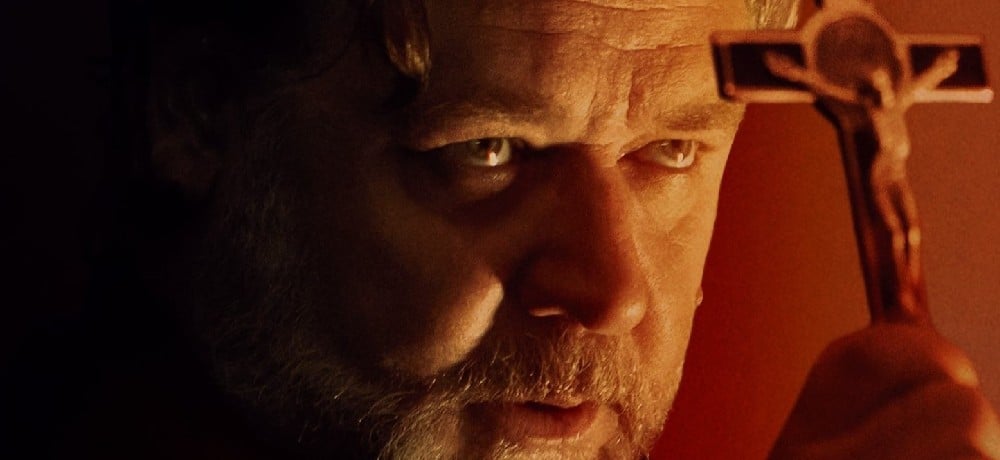
The Pope’s Exorcist understands this dependency and leans into it without hesitation. The film frames the Vatican as humanity’s final line of defence against an ancient, roaming evil that refuses modern explanation. Father Gabriele Amorth moves through the narrative as both spiritual authority and institutional inconvenience, tolerated because he produces results. Doubt exists, but only as a speed bump. The question is never whether Catholicism works, but how efficiently it can be deployed.
And yet, beneath this reassurance lies a far more unsettling implication: the Church does not merely fight evil, it curates it.
The film’s central horror is not possession but suppression. The demon at the heart of The Pope’s Exorcist is not discovered through reckless curiosity or secular interference; it is uncovered because something the Church deliberately buried has been disturbed. A sealed abbey. Hidden records. Knowledge compartmentalized and withheld. The excavation that unleashes evil is not a mistake but a breach in a long-standing system of containment. The Church knew. The Church always knows. The problem is not ignorance, but disclosure.
This is where the film quietly puts itself on trial. The Vatican’s response is not moral reckoning but damage control. Information is rationed. Histories are obscured. Authority flows downward, never outward. Evil is framed as dangerous not because it exists, but because it threatens to expose the Church’s own suppressed past. What must be contained is not just the demon, but the knowledge of how long it has been contained already.
Archaeology becomes horror precisely because it disrupts institutional secrecy. To unearth the past is to destabilize the present. The Church’s fear is not that evil will return, but that its management of evil will be revealed. The solution, predictably, is not transparency but escalation: stronger rituals, tighter control, and a reaffirmation of hierarchy.
This logic mirrors the genre’s real-world entanglements with Catholic authority, most chillingly in the case of Anneliese Michel. In 1970s Germany, Michel’s worsening condition (epileptic seizures) was treated as spiritual crisis rather than medical emergency, even as evidence mounted that exorcism was failing her. Catholicism remained the final and only line of defence not because it was effective, but because abandoning it would have required acknowledging institutional error. Medicine could explain, but faith could absolve. When Michel died of malnutrition after months of ritualized suffering, accountability was partial and belated. The system endured.
Exorcism cinema absorbs this logic wholesale. Catholic ritual is positioned as indispensable even when understanding is incomplete, contested, or actively harmful. The danger is not that exorcism films depict Catholicism as powerful; it is that they depict it as beyond question.
The Pope’s Exorcist dramatizes this most clearly in its portrayal of internal Church politics. The Vatican is not a unified moral force but a bureaucracy invested in secrecy. Younger priests doubt. Officials hesitate. Knowledge is siloed. Amorth himself is tolerated precisely because he operates in the margins, absorbing the moral and spiritual mess the institution refuses to publicly confront. He becomes a buffer between catastrophe and accountability.
Placing this alongside The Exorcist clarifies how possession narratives have shifted. Friedkin’s film is obsessed with restoring order to a single body. specifically the body of an adolescent girl on the brink of sexual and social autonomy. Regan’s possession is framed as a failure of discipline. Her body speaks too loudly, desires too openly, resists containment. The exorcism restores her not just to health, but to legibility. Catholic authority triumphs by reasserting control over unruly flesh.
The Pope’s Exorcist, by contrast, is less interested in disciplining bodies than in disciplining history. The possessed child matters, but the real threat is institutional exposure. The horror lies in what happens when buried knowledge resurfaces, when the past refuses to stay sealed. The exorcism is no longer about restoring innocence, but about preserving authority.
This shift reflects a broader cultural unease with belief itself. Faith in The Pope’s Exorcist feels less like conviction and more like inherited intellectual property. Younger priests treat it as optional, outdated, or embarrassing. The Church knows this, and responds accordingly. Exorcism becomes a spectacle. Ritual becomes proof. Authority must now be demonstrated rather than assumed.
And so the film circles an unspoken question: if there is no evil, what is the point of the Church?
Exorcism cinema has always answered this by insisting that evil exists and must be fought. But The Pope’s Exorcist suggests something more cynical. Evil is not merely the enemy of the Church; it is its alibi. Without demons, rituals lose urgency. Without possession, secrecy loses justification. The Church requires horror to maintain relevance, and horror requires suppression to remain manageable.
What the film ultimately offers is not faith, but reassurance masquerading as faith. Someone is in control. Someone has a protocol. Someone knows what to do. That this control is built on omission, secrecy, and deferred accountability is never fully confronted. It cannot be. To do so would collapse the genre’s central fantasy.
And that is the quiet terror of The Pope’s Exorcist. Not that demons exist, but that institutions can bury their failures, weaponize belief, and still emerge as heroes. The film insists that Catholicism is humanity’s last line of defence. What it accidentally reveals is how often that defence has depended on silence.

