

970x125
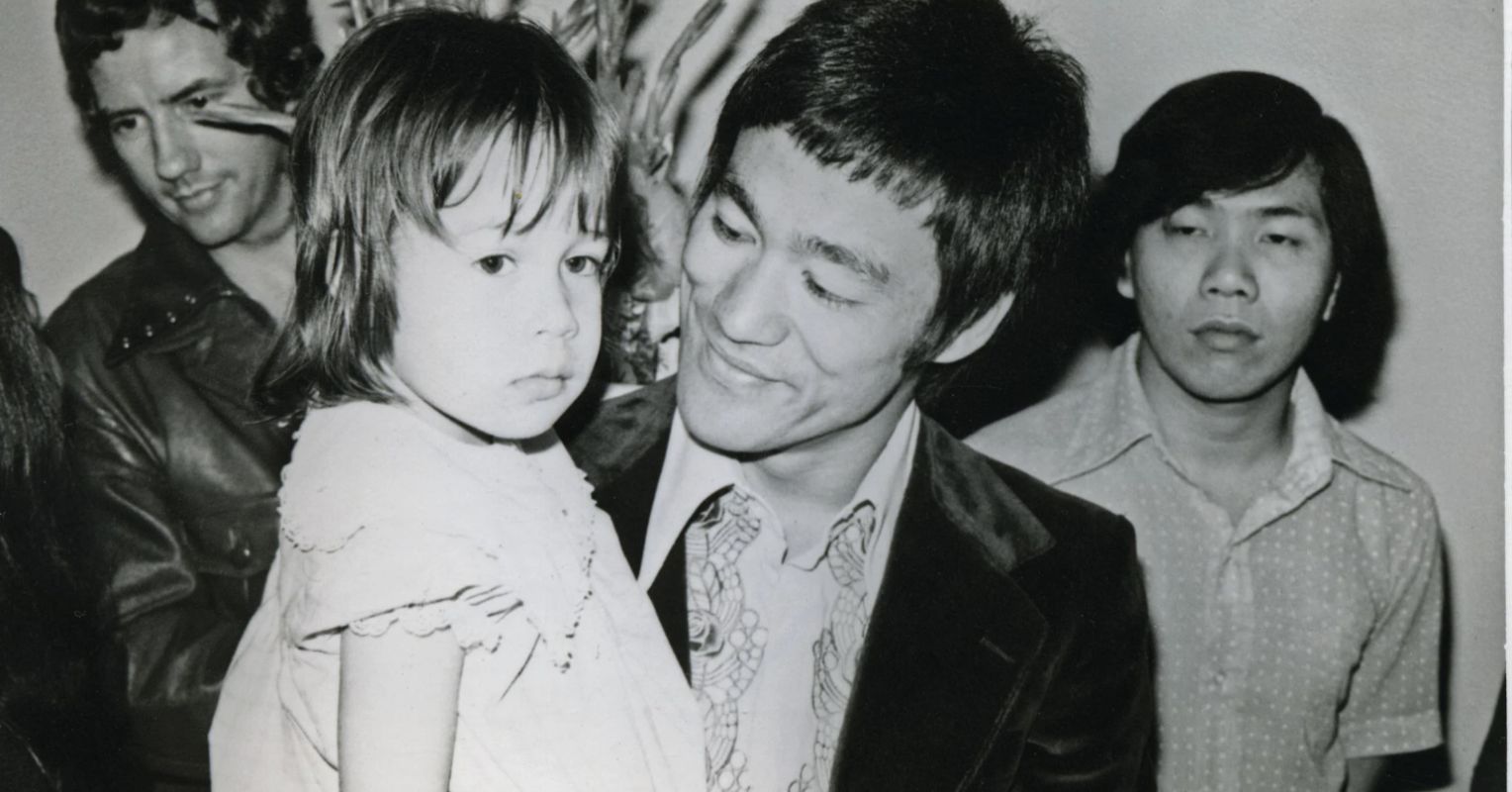
Bruce Lee was and remains a worldwide icon who left an amazing legacy. Even today, more than 50 years after his last movie Enter the Dragon, Bruce Lee polls just behind Tom Hanks as the all-time most popular actor. Sometimes impactful cultural icons leave a legacy that itself spawns more legacies and ripples a positive echo through time.
Bruce Lee’s legacy is represented and shepherded now by his daughter Shannon Lee and her efforts through the nonprofit Bruce Lee Foundation toward making the world a better place through the youth of today. As we’ll see in this brief interview, although Bruce Lee has been gone for many years, his positive impact persists in both his cultural impact and grounded martial arts and life philosophies now and for future generations.
EPZ: From the outside, it looks like you are living and leading the tremendous legacy that your father established. Is that a heavy responsibility?
Shannon Lee: It’s funny because people ask me often, as you can imagine, what is it like being Bruce Lee’s daughter? The answer that I give nowadays, which most people don’t like, is that it’s the same as you being the child of your parent, right? They’re like, no, it’s not. I say, but it is. It’s exactly the same. Of course there are many fans of my father who come up to me and express themselves to me, so perhaps it’s on a different scale sometimes, but otherwise, I still struggle with and encounter the same parent/child dynamics as anyone else. To the enormity of it all, it took me many, many years to finally accept that I was born as Bruce Lee’s daughter, because I am equipped to be Bruce Lee’s daughter.
EPZ: With the establishment of the Bruce Lee Foundation and outreach programs like Camp Bruce Lee and the more recent Warrior Academy, it really feels like you are leveraging Bruce Lee’s legacy in a way that has clear societal benefits.
Shannon Lee: That’s the goal. I understand the benefits of his teachings because they’ve had a profound effect on me. As I individuate from his shadow, I still have to accept and acknowledge those parts of him that are meaningful to me. There’s so much more than the physical aspects of martial arts to my father; his philosophy truly is for society as a whole.
EPZ: Is this something you can expand and relate to your personal experiences?
Shannon Lee: After my brother died, I was obviously very deeply affected by that, and I was in quite a depression. I started to read my father’s writings and there was a particular quote that struck me, that set me on the path to trying to live my life in a different way and to heal myself. He wrote, “The medicine for my suffering I had within me from the very beginning. But I didn’t take it.”
EPZ: That’s a powerful statement.
Shannon Lee: When I read that first line, I was, just like, oh, right! I’m responsible for my own suffering. Nobody is coming to rescue me. I have to rescue myself.
EPZ: Did part of that rescuing circle back to martial arts?
Shannon Lee: For sure. But it’s interesting how people view the martial arts. Because people think of martial arts and they think, well, you’re hitting and kicking, which is violent and that can’t be good. But in truth, the martial arts are there to show you something about yourself. It’s not really about hitting and kicking. It’s actually the antithesis of violence when taught correctly.
EPZ: Martial arts are just methodologies to access meaning in life maybe?
Shannon Lee: Yeah, but people don’t really understand that until they start getting engaged with martial arts practice and training, and then they start to see the reality of it. It’s like my father used to say, that your punches and kicks are really meant to be aimed at yourself. To break down your own barriers that you have: to your own expression, to your own emotions, to all of that.
EPZ: And this is maybe the journey that takes a physical practice of self-defense into something much bigger and impactful across a life?
Shannon Lee: Yes and a big piece of that is there’s a lot of discipline that’s required, which is perhaps expected. Through that discipline you gain skill, inner strength and confidence. Then you start to realize you have become more inwardly powerful in a way. Because you gain more power over yourself, there’s a realization that says, “I don’t want to wield this in a way that is destructive.”
EPZ: You don’t need to feel like the dog who’s cornered and becomes a fear biter.
Shannon Lee: Exactly. Instead you can sort of walk through the world feeling more self-possessed, which is great. And understanding the consequences of your actions.
EPZ: One of my teachers used to always say that the point of martial arts wasn’t to make strong people more powerful but to help empower folks who need it the most. And who might be at most risk.
Philosophy Essential Reads
Shannon Lee: So good! Yes. I’m sure people think, because I’m Bruce Lee’s daughter I’m an incredible martial artist, but I don’t train as much as I used to, and even if I did, there’s always someone more skilled who could take me. But because of my training, I move through the world with a certain air of confidence. If I have to walk down a dark alley at night, I sort of like, puff myself up and think, well, whatever happens, nobody’s taking me down easily! And that translates to any uncomfortable situation.
EPZ: With all the things you’ve done you really have extended and helped implement your father’s legacy. Has this made you feel closer to your father, like connecting through time in some way?
Shannon Lee: For sure it makes me feel closer to my father. This is where my father and I meet. I’ll never be the martial artist that he was. That’s not my jam, even though I love practicing. Where we meet is in the philosophy, which I adore because this can really help people. My father’s philosophy and my practice of martial arts really saved me after my brother Brandon was killed. And I know it can help others too.
EPZ: That was a horrible tragedy.
Shannon Lee: I was deeply depressed and his words spoke to me. His teachings spoke to me, and it really helped me to be able to work through my pain and come out the other side. I was sort of foundationally changed in some way. I really credit my father’s legacy with making me the seeker that I am and the creator that I am today, and, of course, in wanting to create programs like Warrior Academy to benefit society. I think it’s something very meaningful, not just to me, but I think it would be to him as well.
Bruce Lee once talked about using no limit as limit. His legacy certainly has no limit as he continues to have a positive influence through time under the umbrella of the Bruce Lee Foundation and many of the programs and activities shepherded by Shannon Lee.
(c) E. Paul Zehr (2025).
*Interview conducted August 28, 2025.

