

970x125
A few years ago, I noticed my knee shaking when I climbed onto a stepladder. The thing wasn’t even a foot off the ground, and my body reacted like I was scaling Everest. I decided I had to do something to address my fear of heights. As a psychologist, I knew the best approach would be gradual exposure. Climb a rung on a ladder, let your nervous system adjust, then climb another one.
But I’m impatient. Also, I didn’t have a ladder.
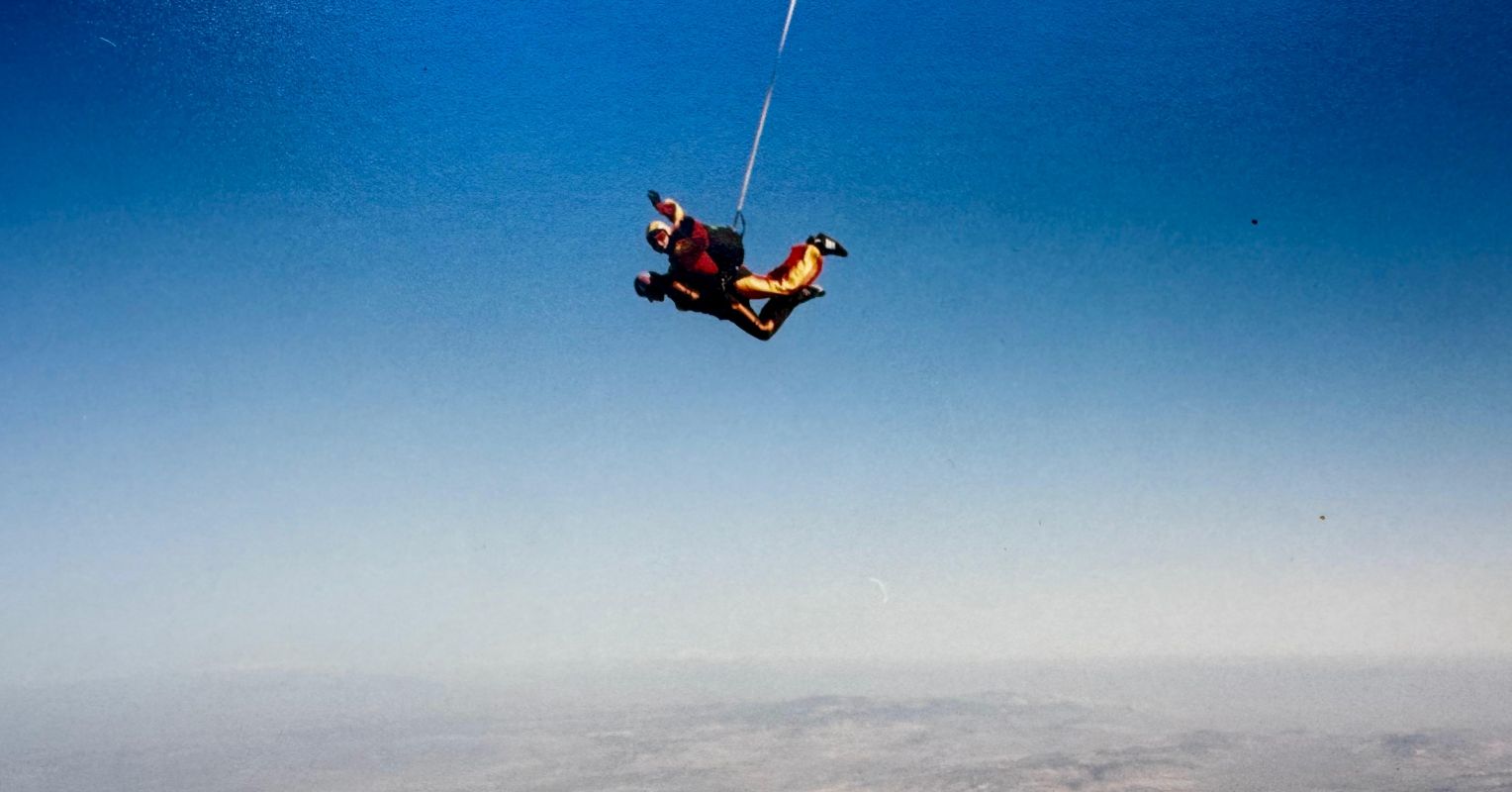
So I decided to try another psychological approach—flooding. Which, in my case, meant doing the scariest thing I could think of: skydiving. If I could make myself jump out of an airplane at 12,000 feet, a stepladder would seem as trivial as a… stepladder.
We all have moments when we need to summon courage: to have a difficult conversation, give a presentation, apply for a program that intimidates us, or ask someone out. The problem is that courage is leaky. You wake up feeling ready to finally do the scary thing, but then you think about it, your stomach drops, you hesitate, your courage drains away, and you put it off. Again. Fortunately, there is a simple way to get over the fear and hesitation and make action easier.
Don’t Commit to the Scary Thing
When something scares us, our mind tends to focus on the most intimidating part: the confrontation, the presentation, the submission, the jump. That focus makes the task feel overwhelming before we have even begun. The brain hack that neutralizes that fear is:
Instead of committing to doing the scary thing, commit only to putting yourself in the situation and give yourself permission not to go through with it once you’re there.
In my case, I knew that when doing a tandem skydive, they would ask me if I was ready to jump once the plane reached altitude, and I was allowed to say no. I told myself that I was not committing to jump out of a plane. I was only committing to get into the plane and decide later. And that distinction made the whole thing feel far more manageable.
Here’s why this works:
When you imagine doing something scary, your brain compares the scary action to doing nothing. The emotional gap between those two options is big, and that makes the scary option seem scarier.
But once you put yourself in the situation, the comparison changes. You’re now comparing the scary option with one that is also emotionally uncomfortable—backing out and feeling awkward, disappointed, embarrassed, and frustrated. The emotional gap between those options is much smaller. There is no easy option, and the threshold for action is much lower because you’re already in the situation. You don’t have to summon enough courage to go from zero to everything, only to take the next small step.
Getting to the Edge of the Diving Board
There was one small detail the skydiving company did not emphasize when explaining that I could refuse the jump. They don’t ask you while you’re seated in the back of the plane. They only ask once you’re sitting at the open door, tethered to the skydiver instructor, looking out into the void.
Very clever that. Because refusing at that point would mean slowly moving back from the door and holding up the line of people waiting to jump after you. Whereas to proceed, you don’t have to make a heroic decision. You just have to nod; the instructor tips forward, and you’re skydiving.
So I nodded.
That is the power of getting yourself to the edge of the diving board, metaphorically speaking. If you need to have a difficult conversation, commit only to telling the person, “I’d like to talk about something.” You can still decide how much to say once the conversation begins.
If you want to apply for a job, program, opportunity, or grant, commit only to completing the application. You can decide later whether to hit send. If you want to speak up in a meeting, commit only to raising your hand or adding your name to the list. You can decide how much to say once you are called on. If you want to take a class, attend an event, or try something new, commit only to showing up. You can always leave if it is not right for you. Most of the time, once you are there, going forward feels easier than you expected.
Our minds often overestimate fear at a distance. Anticipation gives anxiety room to expand. We imagine the worst moments and the worst versions of ourselves. But once we are actually in the situation—once we are half the way up the mountain—the summit doesn’t seem as far.
This brain hack is not about forcing yourself into reckless situations. It is about preventing your brain from magnifying fear from a distance and minimizing your ability to cope. Commit to the situation, not the entire scary act. Preserve your right to back out. Then see what happens when the next step is right in front of you. You might discover that the leap you were avoiding is really just one nod, one sentence, one click, or one small step.
Happy landings.
Adapted from my Substack newsletter, The Psychology Lab.

