

970x125
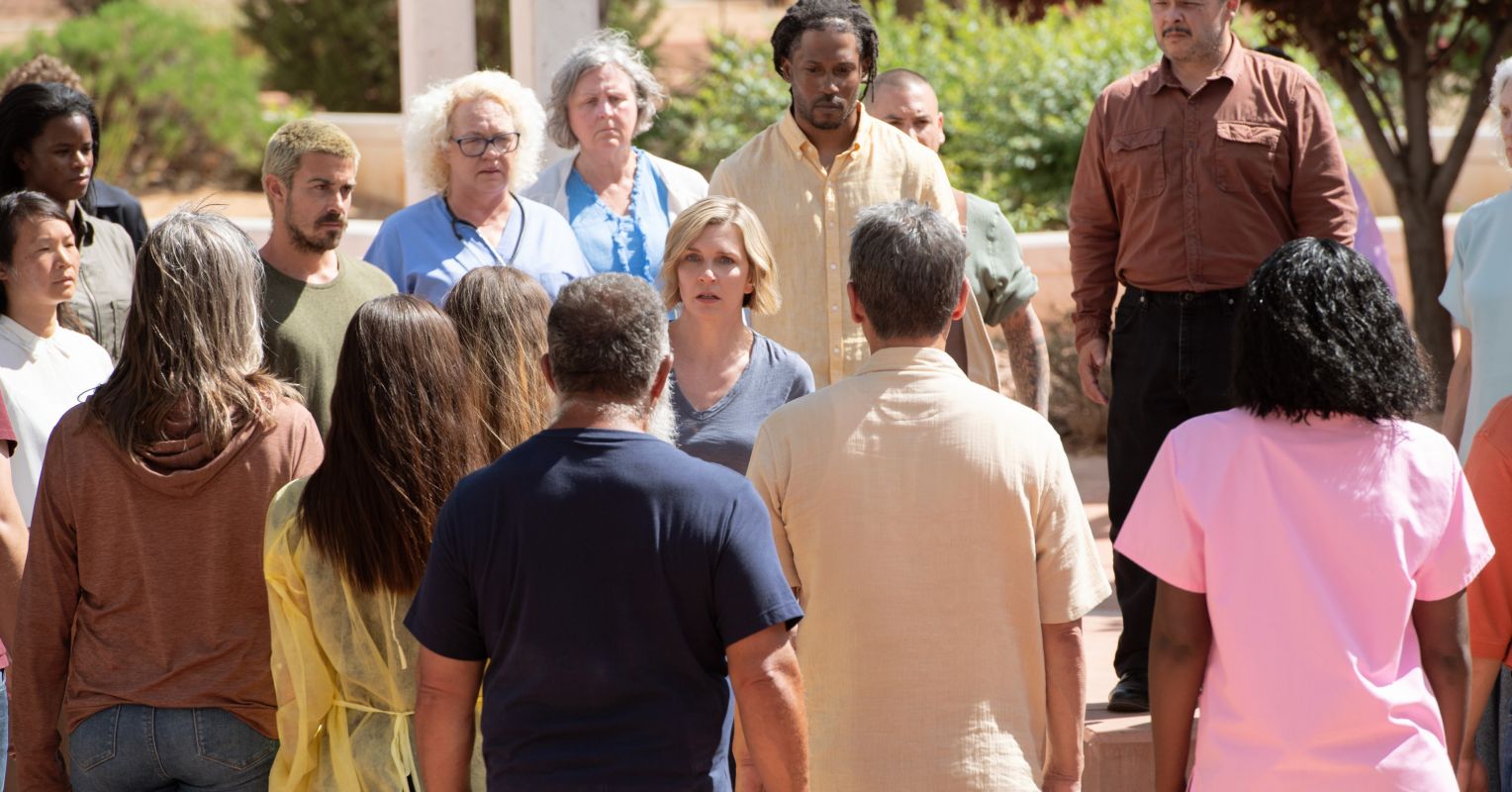
Apple TV’s Pluribus begins with an extraterrestrial virus merging the minds of nearly everyone on Earth into a shared consciousness. The new hive mind brings billions of bodies into perfect harmony, eliminating war, poverty, and loneliness. Meanwhile, Carol Sturka (played by Rhea Seehorn) is virtually the last true individual on Earth. We’re rooting for Carol, but she seems miserable compared to the “Joined.”
Pluribus is about the conflict of the individual and the group, a subject that has long engaged behavioral psychologists. I describe a much-misunderstood experiment on this theme in the 20th anniversary edition of my book Fortune’s Formula: The Untold Story of the Scientific Betting System That Beat the Casinos and Wall Street.
Randy Gallistel, a Yale neuroscientist, placed a rat in a T-shaped maze. An odorless treat was concealed at one of the two ends of the T’s crossbar. Provided the rat scampered to the correct side of the T-maze first, it got the treat.
Gallistel invited his students to play along. Like the rat, they couldn’t see where the food was and had to guess. After each trial, one of two bulbs lit up to show the students where the food had been. This exercise was repeated many times, giving both the humans and the rodent ample opportunity to learn from their mistakes.
It didn’t take long to see a pattern. The rat did better than the humans. It guessed the treat’s location about 75 percent of the time. The students were right barely 60 percent of the time.
The food was placed randomly, with a 75 percent chance of being on the left and a 25 percent chance of being on the right. There was nothing to learn beyond that 75/25 ratio. The rat quickly got the message that the food was more often on the left. It fell into the habit of choosing the left side all the time.
But Gallistel’s students varied their choices, roughly in proportion to the observed left/right ratio. This meant choosing left about 75 percent of the time (and being correct with 75 percent probability). It also meant picking right about 25 percent of the time (and lucking out with 25 percent probability). That resulted in an overall success rate of about 62.5 percent.
Gallistel’s experiment launched decades of glib analysis (often along the lines of Rat Smarter Than Yale Students, Says Study). The popular coverage has spun the results into a warning against overthinking. The students were trying to find a pattern where there was none, it’s said. The rat did better by following its lived experience. That isn’t exactly wrong, but it misses the most interesting aspect of the experiment.
The rat acted as a logical individual, choosing the option with the greater chance of reward. Humans can be logical too! Maybe there are two routes to your place of work, and you’ve found that one is faster than the other 75 percent of the time. You probably take that faster route all the time.
But Galliel’s students used a different strategy called probability matching. In this, options are chosen in proportion to their chance of holding a reward. This may seem an odd approach, but probability matching has been widely documented in humans and animals (including rats, given the right context).
Probability matching is a collectively rational approach that can benefit the group. A rat in the wild is one of many rats exploring a nighttime world in which food could be anywhere. Should all the rats favor the “best” foraging spot, all would be fighting over the same few morsels, and most would end up with nothing. Meanwhile, there might be food in less-favored spots, with little or no competition. A smart (hive-mind) rat collective would do well to send some rats to niches less likely to have food. The group would find more food and have less chance of extinction. Natural selection favors behaviors that enhance the survival of the group.
This framework helps to make sense of Gallistel’s experiment. The rat was not competing against other rats and adopted an individual-first strategy better suited to the artificial world of a one-rat maze. But the Yale students were part of a group competing against each other. Their reward was not cheese but grades or the approval of the professor and their peers. There’s no glory in getting the right answer if everyone else does. This prompted them to adopt the contrarian strategy of probability matching. Of course, they didn’t know that’s what they were doing. It just felt right to switch their guesses every now and then.
The hive mind of Pluribus tells Carol that they are acting according to a “biological imperative.” That is how most biologists understand probability matching. It’s a group-optimal behavior that enhances the survival of genes and species, though not necessarily of individuals. The hive mind is selfless, efficient, and rational from its disembodied perspective—attributes that Pluribus viewers see as creepy. Those same qualities may be part of our shared biological nature.

