

![Thomas Jane talks The Lycan comic Issue 6 Debut [Exclusive]](https://www.wickedhorror.com/wp-content/uploads/2025/12/Lycancrop.jpg "Thomas Jane talks The Lycan comic Issue 6 Debut [Exclusive]")
970x125
In feature films and on television, Thomas Jane has portrayed many classic heroes. Genre fans know well that he’s faced not just criminals but vampires, and unknown cosmic horror, in the case of The Mist (2007) from the Stephen King tale. He’s now part of the creative team for the comic book mini-series that horror fans will also appreciate, The Lycan, a Comixology original. The latest and concluding installment of the series drops today (Dec. 23, 2025.) with more action that pits shipwrecked 18th Century big game hunters against dark “Berserking Beasts,” aka werewolves.
The story focuses on Captain Abslom Coffin of the wrecked ship Calydonian and his crew and longtime comrades plus Sister Rosamund from an order of nuns on the island. It all provides ingredients for character-rich excitement that’s nicely summed up in the official synopsis of the series:
Year of Our Lord 1777: A hardened band of international big game hunters returning from Africa are shipwrecked off a small British island.
In exchange for new supplies and the repairing of their good ship The Calydonian, Lord Ludgate engages the men for a task they are particularly well suited for: find the Berserking Beasts that have been eating his subjects, including a group of young Benedictine Nuns, and destroy them.
To commemorate that concluding chapter, Jane recently took time to field some questions from Wicked Horror from the set of a project he’s currently filming. Turns out, Jane is a massive comics fan, so he revealed a few favorites. His passion for the comics form and his role in making Lycan possible quickly become apparent in his responses.
WH: You’re renowned for being in front of the camera in the world of film and television including bringing the comic book character The Punisher to life, but what drew you to the comics world as a creator?
Thomas Jane: I fell into comics when the world was FM radio, network television and VCR video tape. Phones were nailed to the kitchen wall and if you were fancy, you’d have a really long cord so you could boil spaghetti while shooting the shit with your friends. Color comic strips came out on Sundays, and you could copy them with silly putty and give Garfield a giant head.
My world was horror and sci-fi comics by Pacific Comics and Eclipse, Twisted Tales and Alien Worlds by Bruce Jones Dave Stevens’ Rocketeer — and Russ Cochran’s E.C. reprints rocked my teenage mind. These were tight 6–8 page tales with the patented E.C. twist ending, and they had heart and they made you think. The stories were not for kids, and that’s why we loved them. The “gang of idiots” at E.C. were carefully cast for each story; Al Williamson or Wally Wood for the space operas, Jack Davis for the war stuff, Johnny Craig for the noir crime, Graham “Ghastly” Ingels for the period gothic stuff, and a few others like the brilliant B. Krigstein, Jack Kamen, Johnny Severin, and, of course, the great Al Feldstein, who wrote with Bill Gaines and also drew stories; his art really grew on me. These, along with the Warren magazines that carried the torch into the 1970s and then the Pacific stuff into the ’80s, taught me that casting the right artist for the right story elevated both.
Then I fell in love with the underground — Death Rattle, Corn Fed, Fantagor, Zap, Slow Death by Last Gasp and Kitchen Sink. Richard Corben, R. Crumb, Kim Deitch. Then Jim Woodring and Charles Burns later, these carved out a space in my soul and completed the warping of my misspent youth.
I wanted to become a comic book artist myself, and I was pretty good ripping off Wrightson and not so good at Stevens, but when high school theater came along, I pivoted to acting. Great comicbook stories have always come alive for me, made movies in my head, they have saved my sanity, they have lit a fire in me that refuses to die. So I have a desire to give something back to that, to pass the torch in some small way.

WH: What appealed to you about a historical horror tale like Lycan and how did the project take shape. It was in development for some time, right?
Thomas Jane: I was writing a screenplay with David James Kelly and he came to me with the basic story one day. We thought it would make a great book so we worked on the outline. David came up with all the characters, their names, which I loved, and the set up. It all came out of his head, I just sculpted it with him. Then I was working with some British artists for my first company, Raw Studios, and got in touch with Mike Carey, who happened to have a gap in his schedule and agreed to write the script. That’s when the story came to life. He just killed it. As the pages came in, I was in awe at how he captured the period, created the language of the characters, and told the story. Reading his script, I saw Franklin Booth and Joseph Clement Coll — that level of detail and the mood they captured with pen and ink, the gothic cross-hatching and detail that’s rare to find these days because who has the time?
They were both dead, however, so Tim Bradstreet and I found a British artist named Sean O’Conner, who was doing incredible work with the detail and tone we wanted, but hadn’t had a lot published. So we took a chance on him, and he delivered some amazing pages, a few of which I’ve included in the books. This was back in 2010? Me and Bradstreet were working out of Raw Studios, which we had set up with Steve Niles to do Bad Planet and Alien Pig Farm 3000 and a couple other things. Then, after one fantastic issue, Sean disappeared. He just vanished. I even flew to the UK to look for him, but never found him again. I didn’t know any of his friends and social media wasn’t a thing. It was heartbreaking. To this day I don’t know what happened to Sean. So I put the book in a drawer.
Then I started Renegade with Courtney Penn in 2020 and we had some early success with film and television. Courtney said we should do a graphic novel — do you have anything? So we dusted off Lycan and proceeded to find a home. Comixology saw Mike’s script, loved it and gave us a shot. We are very grateful for Jeff and Pam and the gang over there for giving us the creative freedom and the time to put the book together the best way we could.
WH: What’s the collaboration process like with the team on Lycan? You’re in the bullpen, so to speak, with an interesting mix of creative people, David James Kelly, Mike Carey and Diego Yapur plus other artists.
Thomas Jane: So began the process of casting the right artist. This is a painful expedition of going to the comic shop and flipping through hundreds of recent books, looking for the right guy who is alive and available. It’s the most important decision you’ll make once you have the script. It’s a matter of who is right for the story, who has the chops to pull it off, and who is not under contract to a big studio. For independent books, it can be tricky. I was at a shop, Secret Headquarters in Silver Lake, probably, flipping through an issue of Heavy Metal and found Diego Yapur. He was not available. He was finishing up another job and we said, we’ll wait. And that’s why you need a publisher like Comixology, who was willing to let us wait and get the artist we wanted — the one that was right for the story.
You put the book together once, and then it’s out there forever. Not everyone can take that kind of time — we’ve got bills to pay — but since comics are not my day job, I figure I better do the best I can to get it right, to contribute something worthy of the reader’s time. Comics have so much competition now from that little black mirror, from the Netflix and the podcast and the mind virus of social media. But there’s a lot of great work being done these days from small independent artists and publishers, so if we can take the time to make something of quality, it might inspire readers to seek out more independent work and feed their eyeballs with some red meat for a change.
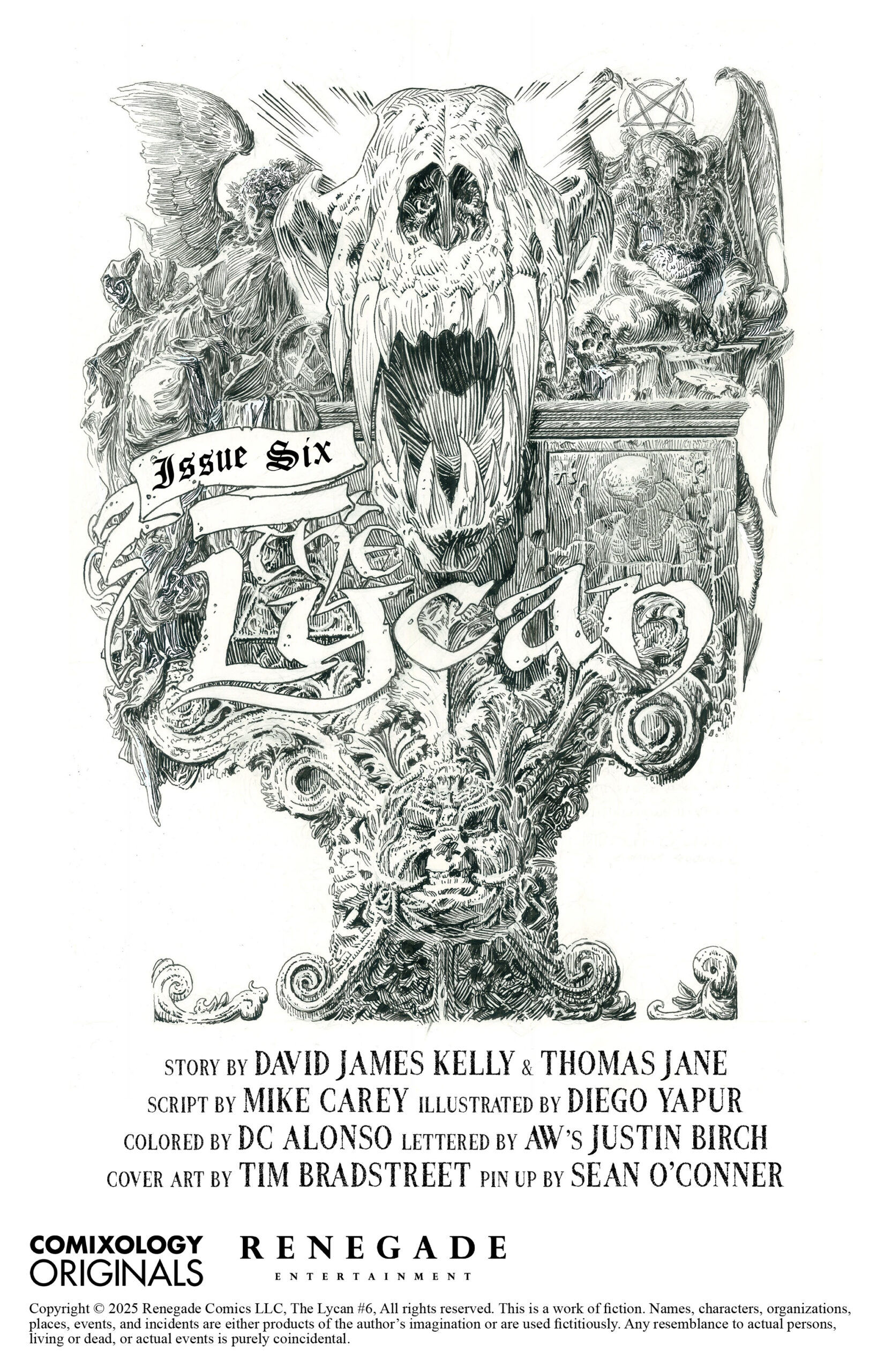
WH: You’ve directed some film and TV projects as well as starring, and you’re credited in part as an editor on Lycan. Is stepping into the editor’s role on a comic akin to directing?
Thomas Jane: For me that is exactly what it is. I am the facilitator. I find a story that I love, that I want to live with long enough to bring it to life, and I cast each collaborator carefully to craft the bigger picture. Diego suggested DC Alonso for our colorist, and initially I didn’t see what I was looking for, but I figured Diego, being a wonderful artist, knew what he was talking about, so I worked with DC and suddenly we started getting these great pages from him. The colors evolved from issue to issue as we found the pallet, found the tone, and DC was versatile and creatively in tune with the story, and he really caught the wave. Each issue was better than the last. That’s my job; guiding the artists into the story, keeping the bigger picture in mind so they can focus on the details. With Diego it was all about the storyboards and giving him the license to interpret the script in a way that was inspiring to him, but making sure we were serving the story, the beats, the drama.
“I will always do comic books that are meant to be comic books first, that’s where the story lives and dies.”
– Thomas Jane
WH: What are the challenges of telling a visual story in comics?
Thomas Jane:
The challenges are the same as film: drama, pacing, angles, when to do a wide shot and when to hit the ECU — and they are unique to comics: space. You have a very limited space to tell the story. Being able to flesh out the characters and move the plot and create scenes that are entertaining and make you want to flip the page — and then smack the reader with a splash page — that’s where a terrific writer like Carey really shines. The realism of his dialogue is a total parlor trick because he’s able to create convincing dialogue that comes from the period and have fun with the words, like “God’s teeth! Where’s the Captain going?” — and do all that with an exquisite economy.
Great comic writing is all about rich story, told with extreme economy. What we’re doing, really, is snapshots. It’s story told in a series of snapshots, but instead of the realism of film, it’s snapshots of the mind, of imagination, where anything is possible.
Working with AW’s Justin Birch on the letters was another opportunity to perfect the tone; I liked the old days with hand lettering because it creates a vibe, but we worked together to find the right font that fit the tone we were going for and then the sound FX — KLONK — that kind of stuff, you can work with color and size and placement to keep the story alive and fresh and hopefully, surprising. That comes from reading a ton of comic books, knowing the language. All these artists are fans first, they love this stuff and really, the first job is to preserve that, let the artist do what they love.
WH: What can readers expect in Issue 6?
Thomas Jane: Issue Six is the all-important climax, where we reveal why we’re telling you this story in the first place. The different pieces of the story come together, while the characters get torn to pieces. Lycan is a gothic romance, but it’s also a bro-mance, though they’d never call it that — it’s about this tight knit gang of highly skilled professional hunters, who’ve been through the wars together, battled lions and tigers and 24-foot crocodiles in the African Savannah, the jungles of South America, the wilds of India, but they’ve never seen anything like a seething clan of dire wolves — dire werewolves. With the Lycan, our hunters have finally met their match. Absolom Coffin has met his match. And like all great partnerships, there will come a day when you have to break up the band.
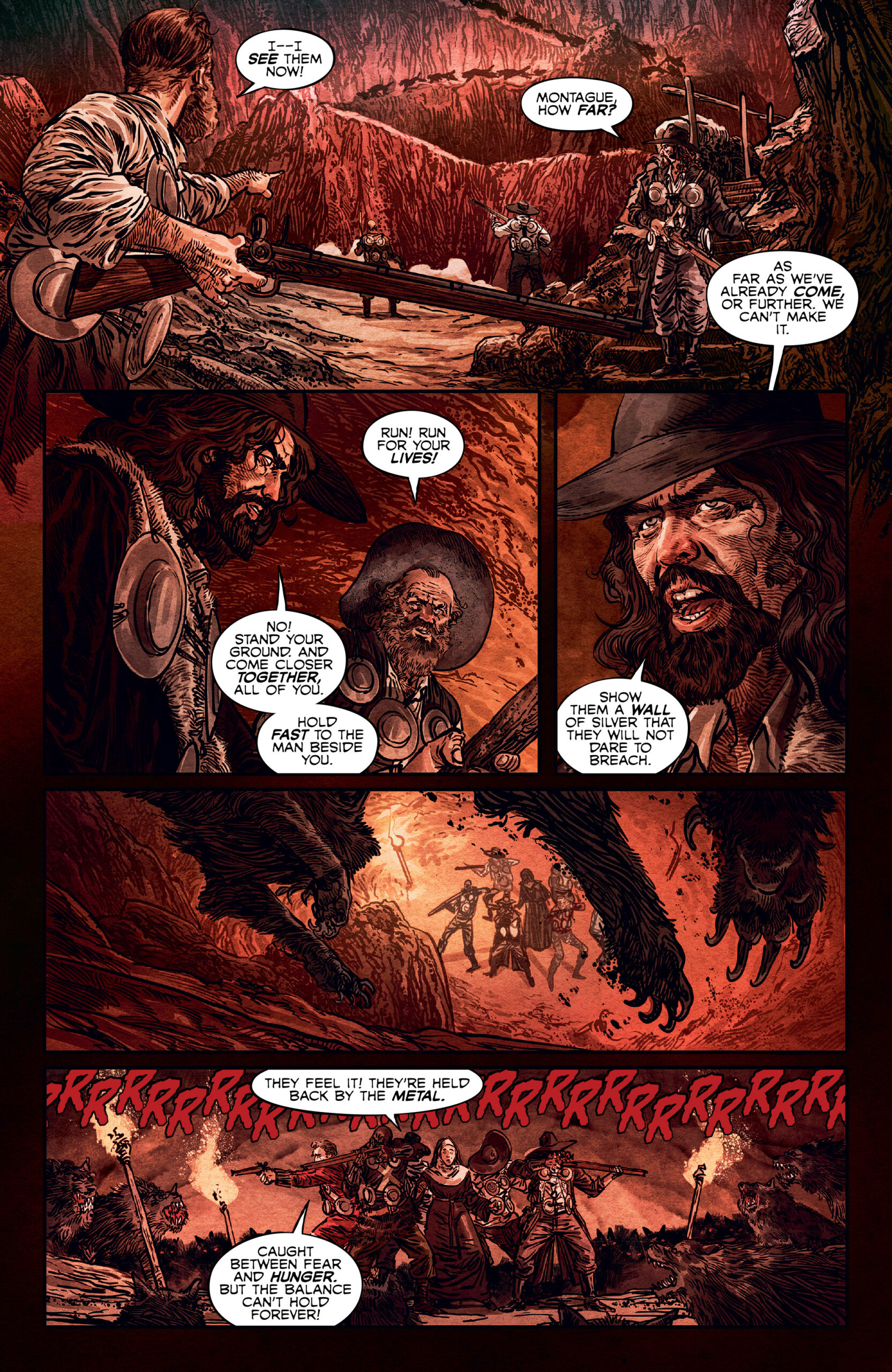
WH:The art in Lycan is almost photo-realistic with beautifully dark atmospheric touches. Do you ever envision a film or TV adaptation?
Thomas Jane: That’s great to hear. Comic books should be eye candy with vitamins that feed the soul. They should be sticky. If you’ve got Tim Bradstreet and Liam Sharp setting up your covers, you better have a fine payoff when you open the book. I will always do comic books that are meant to be comic books first, that’s where the story lives and dies. The medium serves the message, and I can usually tell when a screenplay has been rejiggered to be a graphic novel. Occasionally that works, but usually not. I respect the medium too much to ever do that myself. It so happens that Lycan would make a fine film — but the story of Coffin and Rosamund will always live where it lies right now.
Check out the world of The Lycan on Comixology where all issues should now be available.

