

970x125
Though I’m increasingly aware that it ages me, I have an admission: I’m a Facebook user.
I know it’s not the trendiest social media outlet, but like anyone else, I’m a product of my generation. After all, I was “born in the 1900s” (as my children love to remind me). So I’ve made my peace with it.
Recently I joined a group on Facebook, which I don’t often do. Despite signing up in 2008 (geez), I’ve only ever joined a handful over the years. Chalk it up to my combination of fierce independence and mild technophobia. But this one seemed worthwhile: it’s a support group for people affected by Huntington’s Disease (HD).
The Outsider
Since discovering I am gene-positive for HD almost four years ago, I’ve done my best to grapple with the reality of my doomed DNA in my own way: thinking, meditating, writing, and talking with my therapist. I’ve even participated in a few research studies because I care deeply about helping to find a cure. Most of all, I’ve been trying to live intentionally and experience as much as possible while I’m still healthy.
What I haven’t done is avail myself of the support of the broader HD community.
Due to its high degree of devastation, HD is an illness that brings people together. But up to now, leaning into the HD community hasn’t felt like a necessary step. I am asymptomatic, which means the involuntary motor symptoms that characterize HD haven’t manifested yet. In that sense, I don’t feel like I’m in the “in group.” In all honesty, it’s been kind of reassuring to be on outskirts, because it means the harbinger of death hasn’t come for me quite yet.
There’s also the bit of pride I keep in being someone who frequently goes it alone. Isolation was a conditioned response of my early childhood trauma, and it’s a defensive pattern I’ve kept up over the decades. As if that were not a cool enough trick, I can also intellectually acknowledge the utility of having a group for moral support while denying myself that benefit: others might need a group, but surely I can do it by myself. Cognitive dissonance, anyone?
Humility
One of the double-edged swords of living intentionally is being more mindful of my realities and my responses to them. It sounds good in theory, but it means I often confront things in myself that would be easier to avoid. In this case, it meant looking at my resistance to group support and evaluating whether my reasons for it held up under scrutiny.
This led me to two conclusions. First, the fact that I can hold the disease at arm’s length doesn’t mean I’m not affected by it. True, my symptoms aren’t taking over yet, but the practical side of me knows it’s only a matter of time before they will. Indeed, the fact that my body is set to self-destruct rarely leaves my awareness. So to say I’m not affected by it is false. And if I am affected by it, then by definition, I am in the group, whether I want to be or not.
Second, though it disrupts my well-formed neural networks of posttraumatic hyper-independence, I also recognize that connecting with a group could provide an opportunity for what we therapist nerds call a corrective emotional experience. That is, maybe having the unconditional support of an empathetic group could teach my nervous system how to receive help, instead of feeling like it can’t trust anyone.
I decided to humble myself.
Joining the Group
So far it’s been a mixed experience. Posts from the group show up at the top of my feed now, so the heaviness of it all confronts me as soon as I open Facebook. Some are from those who are further along in their disease progression, seeking connection as they face their ever-advancing debilitation. Just as many are from caregivers lamenting the dreadful burden of watching their spouse, parent, sibling, or child suffer.
If that were all there were to it, I’d probably peace out and go back to my lonesome: people seeking catharsis for the deathly toll this illness brings doesn’t mix well with my depression.
But there is more.
Amidst the sadness, I also find glimmers of love, compassion, and understanding. I see people holding space for each other’s grief as they navigate this unwanted journey. It reminds me that sometimes people are genuinely good. Sometimes, fellow humans know exactly how to hold the weight of fear, uncertainty, and loss. There are even those among us—living saints—who watch as their loved ones become shadows of their former selves, and still choose to remain by their sides to the very end.
Rewiring
This is a great solace to my distrustful nervous system, which learned in childhood that my vulnerability was something to be taken advantage of by those more powerful. To have HD is nothing if not an exercise in vulnerability. I’m told this disease is going to wrestle my independence away from me no matter how strong I think I am, and I will be at the mercy of my caregivers. Vulnerability will not be a choice, but a perpetual, inescapable state of being.
To my trauma-brain, the thought of this is nothing short of my personal hell. So in observing the deep empathy of this community, I am inviting my nervous system to begin trusting that my vulnerability will be honored and protected in ways that feel completely foreign. I dare to hope that the depth and breadth of human kindness I see might one day be extended to me as well.
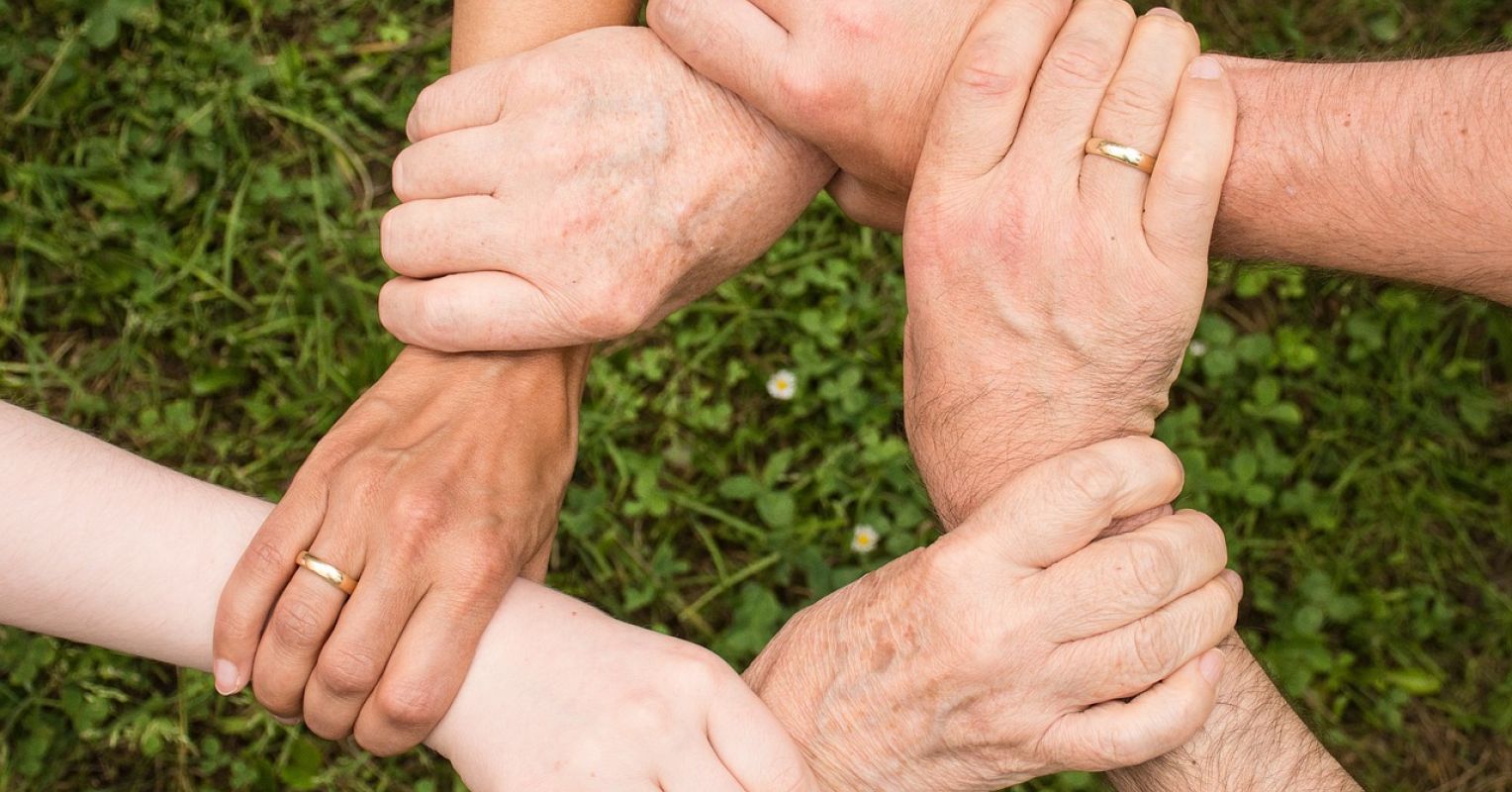
This is the power of communal healing. I soften as I witness the light that arises when pain and vulnerability are met with love instead of scorn.
In the end, that’s all I can really hope for.
Cheers to that, and, I guess, to Facebook. Who knew.

