

970x125
Despite your achievements, do you continue to feel like you’re not enough? That no matter how hard you try, an inner voice whispers doubt? If so, you’re not alone. Many people, even those who have spent years in therapy or personal growth, find themselves haunted by this persistent feeling.
As a clinical psychologist, I’ve worked with countless clients like someone I’ll call Ted, who, despite deep self-awareness and effort, still struggles with feelings of inadequacy. He worries that his current partner will begin feeling this way towards him. Ted’s story is not unique. He came to me after a long history of addressing this belief, which kept him anxious in relationships. Even though he understood the source of his discomfort — a distant mother — and worked diligently to heal, something would always trigger its reemergence. When this occurred, Ted felt like it would never go away.
One day, Ted asked me, “Will I ever get beyond it? Does this process ever get easier?”
The Power of Childhood Lessons: Where “I’m Not Enough” Begins
Our earliest lessons are deeply imprinted survival strategies. As children, we depend entirely on our caregivers for safety and validation. When those caregivers are distracted, stressed, or emotionally unavailable, we can misinterpret their behavior as a reflection of our own worth. For example, a child with a distant or depressed parent may unconsciously conclude, “There must be something wrong with me,” rather than recognizing the parent’s limitations. This self-blame is an adaptive mechanism — it preserves hope that if we can just “learn to do it better,” we’ll finally get the love and attention we need and crave.
These deeply ingrained lessons form what I call your Primitive Gestalt Pattern (PGP) — the core beliefs about yourself shaped in childhood. Over time, these beliefs become embedded in your neural networks and your identity, feeling as if they are part of your DNA and the truth about who you are.
Why Is It So Hard to Overcome “I’m Not Enough” Beliefs?
Even after years of therapy or personal growth, many find that their core feelings of inadequacy persist. Why? Because new, healthier beliefs often sit on top of the old ones, rather than replacing them. Like a child covering their ears to block out discomfort, we layer positive affirmations and new learning over deeply rooted negative messages. The old beliefs remain the foundation.
Many healing approaches focus on coping with, or distracting from, the negative voice, rather than uprooting it. We may shout down our inner critic or try to ignore it, but it resurfaces at vulnerable moments. Blocking this emotional pain creates further barriers, making it hard to connect with our true feelings. This armoring can interfere with our ability to accept positive experiences and integrate a new, healthier self-message.
Another obstacle is the tendency to base expectations on past experience. If we continue to anchor ourselves in old beliefs, we remain stuck in old patterns, unable to fully embrace change.
How to Start Feeling Like You’re Enough
When Ted asked if it ever gets easier, I said yes. It happens when you shift your grounding — from the lessons of your PGP to a new and healthier inner voice. When you consistently say “no” to the old pattern and recognize these lessons as inaccurate and instead reference a positive voice with a healthy perspective, you move from uphill struggle to downhill momentum.
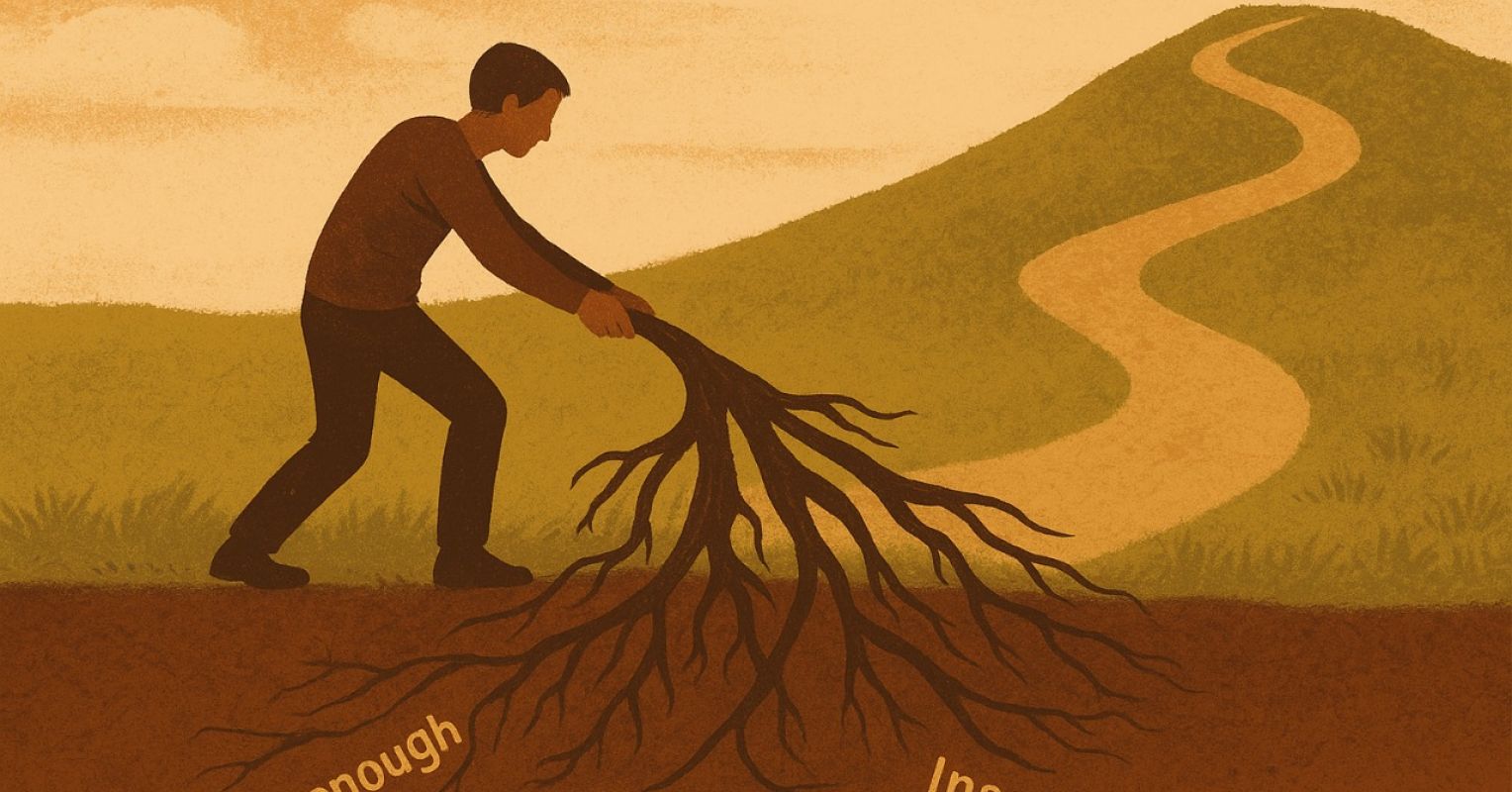
This requires more than layering new beliefs over old ones — it demands pulling out the negative messages by their roots. The good news is that neuroplasticity, our brain’s ability to rewire itself, makes this possible. With intentional effort, you can create new neural pathways that support a healthier self-concept.
10 Keys to Removing Old Stubborn Beliefs for True Transformation
Below are 10 actionable steps to engage neuroplasticity, uproot old beliefs, and facilitate deep change. Each step is designed to help you move toward a more authentic and positive sense of self-worth.
1. Decide to Let Go
Make a bold decision to release the belief that you’re not enough and embrace a more empowering self-image. This commitment is the foundation for change. As Goethe said, “When you make a bold decision, the Universe conspires to make it happen.” Let your excitement about this choice fuel your journey.
2. Recognize the Origin of Old Beliefs
Acknowledge that your negative beliefs were learned from your early environment — they are not part of your DNA. By recognizing that these beliefs were installed by outside forces, you take the first step in separating yourself from them. If they were learned, they can be unlearned.
3. Practice Self-Acceptance
Accept yourself as you are, right now. Notice when you criticize yourself for not being further along and instead offer compassion. Accepting your starting point creates a foundation for growth. Remember, acceptance doesn’t mean you like your current reality — it means you’re willing to work with it.
4. Believe That Change Is Possible
Recognize that your existing beliefs are not accurate, but habit patterns ingrained through years of reinforcement. With effort and patience, you can learn new and healthier patterns. This belief opens doors to neuroplasticity and transformation.
5. Create a New Vision
Don’t just focus on what needs to be removed — define where you want to go and the qualities you want to embody. Visualize your transformed future self, beginning with a loving and accepting relationship with yourself. Be the great parent to yourself that you needed when you were growing up. Here are the qualities you want your new internal parent and voice to come from: love, compassion, acceptance, support, self-care and joy.
6. Immunize Yourself from Disappointment
Understand that old beliefs are firmly embedded in your neural network. The process of neuroplasticity will take practice, repetition, and time. Each day you follow these steps, you put yourself on the path to transformation, even if progress feels slow.
7. Establish “The Path”
Create the notion of The Path—a daily opportunity for success. Each time you notice an old pattern and choose a healthier response, you are on The Path. Celebrate these moments as victories.
8. Challenge and Remove Old Messages
Become a warrior for change. Actively search for and challenge old, negative beliefs as they arise. Acknowledge your growth, successes, and positive feedback from others. Let these experiences energize new neural connections and weaken the old ones.
9. Accept Vulnerability and Discomfort
Letting go of old patterns means moving into new territory. Allow yourself to be open and trust the process. Tolerate the inevitable discomfort as part of growth — these are your “growing pains.”
10. Celebrate and Validate the New
Transformation is enhanced by raising your energy and emotions around positive change. Consciously affirm your new, healthier voice. Trust those who see your value. Celebrate each step of your transformation — this accelerates neuroplasticity.
Your Natural State Is Wholeness
Ultimately, your natural state is one of wholeness and adaptability. Without the negative lessons of childhood, you would likely experience yourself as “enough.” By understanding the origins of your self-beliefs, recognizing the obstacles to change, and committing to these steps of deep transformation, you can move toward a more authentic and positive sense of self-worth.
Remember: The journey to self-acceptance is ongoing. Each step you take is a victory. You are, and always have been, enough.

