

970x125
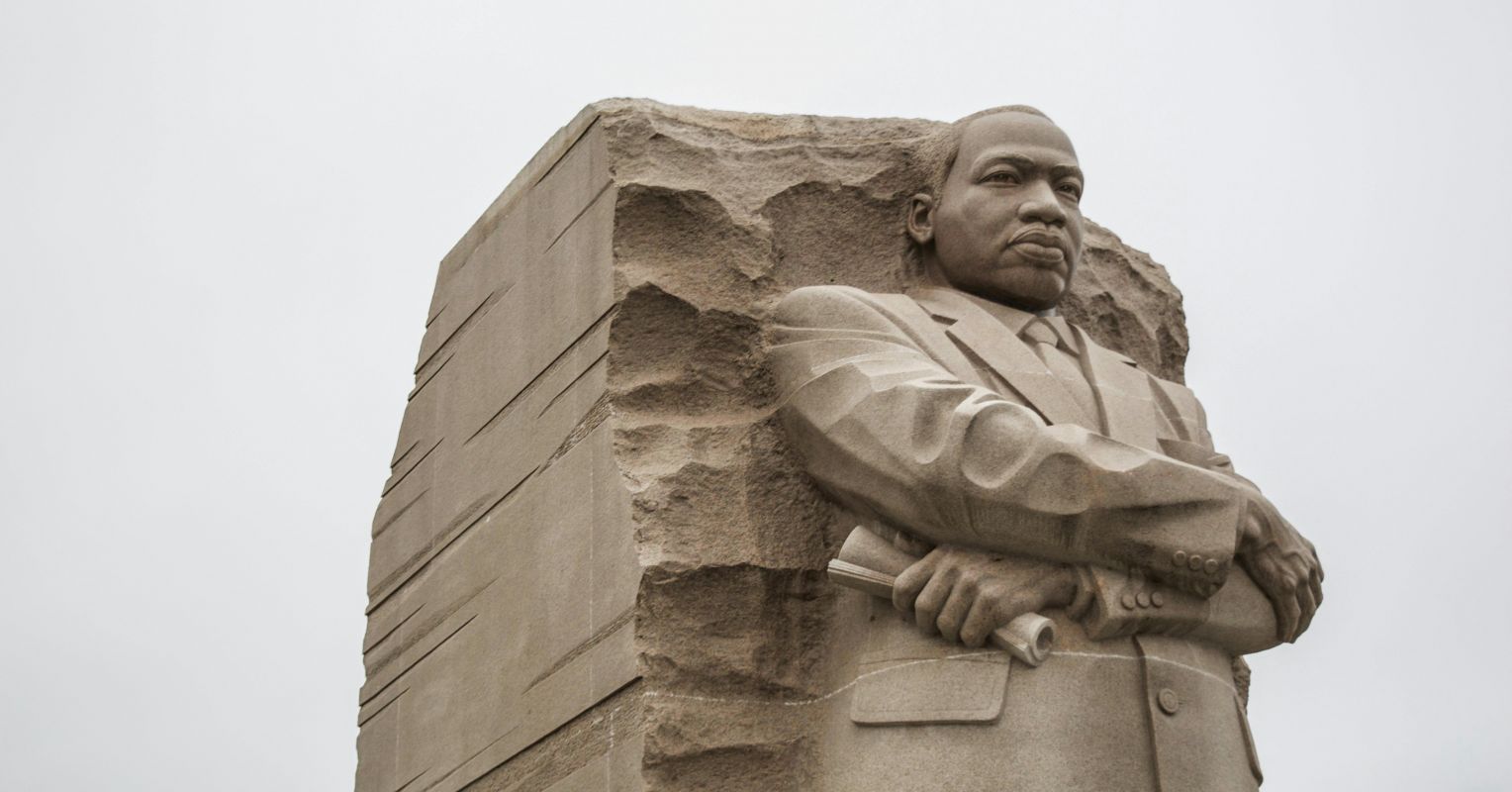
Two pronouncements by Martin Luther King Jr. are familiar. In the first, he dreams that his children “will one day live in a nation where they will not be judged by the color of their skin, but by the content of their character.”
In another, adapted from Theodore Parker, a 19th-century abolitionist preacher, Dr. King points to another aspect of his dream. King writes, “The arc of the moral universe is long, but it bends towards justice.”
The first quote points to individual behavior, the second toward social action. Dr. King didn’t emphasize one approach over the other. For him, personal and social morality were of a piece. A good world is one that is both kind and just.
Another statement attributed to Dr. King is more pointed than these others. The source of the quote is elusive, but the sentiment is consistent with his sermons, his speeches, and his actions. Here, Dr. King asks us to examine our lives. He wrote, “Life’s most persistent and urgent question is, ‘What are you doing for others?’”
There are several assumptions in his question. He assumes that empathy is part of human nature. Second, he assumes that compassion is a good thing. And he assumes that the traits that lead us to care about others can be put into action.
All three assumptions have been contested. Psychological egoism dismisses altruism as an illusion, claiming that all that guides us is self-interest.
Next, some prominent public figures, such as Elon Musk, describe empathy as a flaw to be overcome, as it undermines the hardness needed to advance civilization itself. And many psychologists and philosophers claim that we really can’t choose at all, as free will doesn’t exist; our behavior is determined by external psychological, sociological, and material factors beyond our awareness and control.
With these contrarian opinions, it is possible to reach the conclusion that King’s question—What are you doing for others?—is irrelevant. Critics contend our actions are irrevocably self-centered, or we need to suppress our capacity for empathy, or we bear no responsibility for our behavior since we couldn’t have chosen it in the first place.
This isn’t the place to examine each of the claims. The answer to King’s question comes down to something else: Are you inspired by Dr. King, the ideals for which he stood, and how he lived his life? Are his principles worth embracing? Are you willing to side with the oppressed, the poor, the stranger at the door? King marched for civil rights, and he was beaten and jailed. He stood with striking sanitation workers and was assassinated. You can be inspired and ask the question again: What am I doing for others?
When we live with and for others in the spirit of respect and justice, we find that we are at the same time making a better life for ourselves. This, I think, is what Dr. King meant by the beloved community, the place where all people live in love and justice, a world without hunger or discrimination, where wealth is not only for the wealthy but is distributed fairly. It is a dream that can be made real by personal effort and systemic change, the cultivation of empathy and social justice.

