

970x125
Twelve seconds. That’s how long Lindsey Vonn’s Olympic downhill run lasted before it ended in a crash.
In the days before the race, scrutiny reverberated around the world.
Why can’t she just stop? She’s injured, and there’s no way she should do this. She’s courageous. A real champion who should absolutely go for it.
In the hours that followed her crash, the commentary focused on Vonn’s character and gritty resilience. The media framed her as “true American grit,” praising her as fearless and relentless, celebrating her as a hero and role model for perseverance and strength. Her competitive drive was described as an “indefatigable fight, fight, fight spirit.”
This framing is powerful and inspiring. It is also incomplete.
When we look more closely at what happens under extreme pressure to deliver while negotiating a range of public opinion, a different story unfolds. A story that has less to do with grit and courage and more to do with how the nervous system adaptively organizes under those conditions.
This is a story about why such adaptive shifts cannot be willed into compliance through intensity or forced into performance through determination.
The Inside Story
So much was happening inside Lindsey’s body before she ever left the starting gate. Whether she, or anyone around her, could recognize and respect those signals mattered more than her commitment or character could overcome.
Her decision to race was not right or wrong. She later reflected that “my Olympic dream did not finish the way I dreamt it would” and “I have no regrets.” What matters is that her physiological state, and the flexibility of her nervous system, were already constrained before she entered the start shack. Not only by the pressure of the moment but also by the injury to the anterior cruciate ligament she sustained just days earlier.
Following the crash, Vonn shared that “my ACL and past injuries had nothing to do with my crash whatsoever.” From a physiological perspective, however, injury and pain influence adaptability and performance even when we think they weren’t a direct cause of a fall.
Leading up to the race, Vonn publicly described her injured knee as feeling stable and strong, and with the help of a brace, she was confident about competing. Although this kind of reframing may be helpful, the nervous system still registers her torn ligament, adding another layer of uncertainty and physiological constraint into the overall equation.
Before an athlete leaves the start gate, before a leader speaks, before a surgeon makes the first incision, the nervous system has already assessed the conditions and begun organizing the body for action. The preparation takes into account internal, external, and relational features, and adjusts sensory prioritization, heart rate, breathing, attention, organ function, and motor control before conscious involvement.
Athletes often describe this state as feeling tight, rushed, or out of rhythm. The shift is adaptive, to help us navigate uncertainty. But in complex, fast-changing environments, it comes with costs we rarely acknowledge and limitations we often believe can be overcome with more intensity and focus.
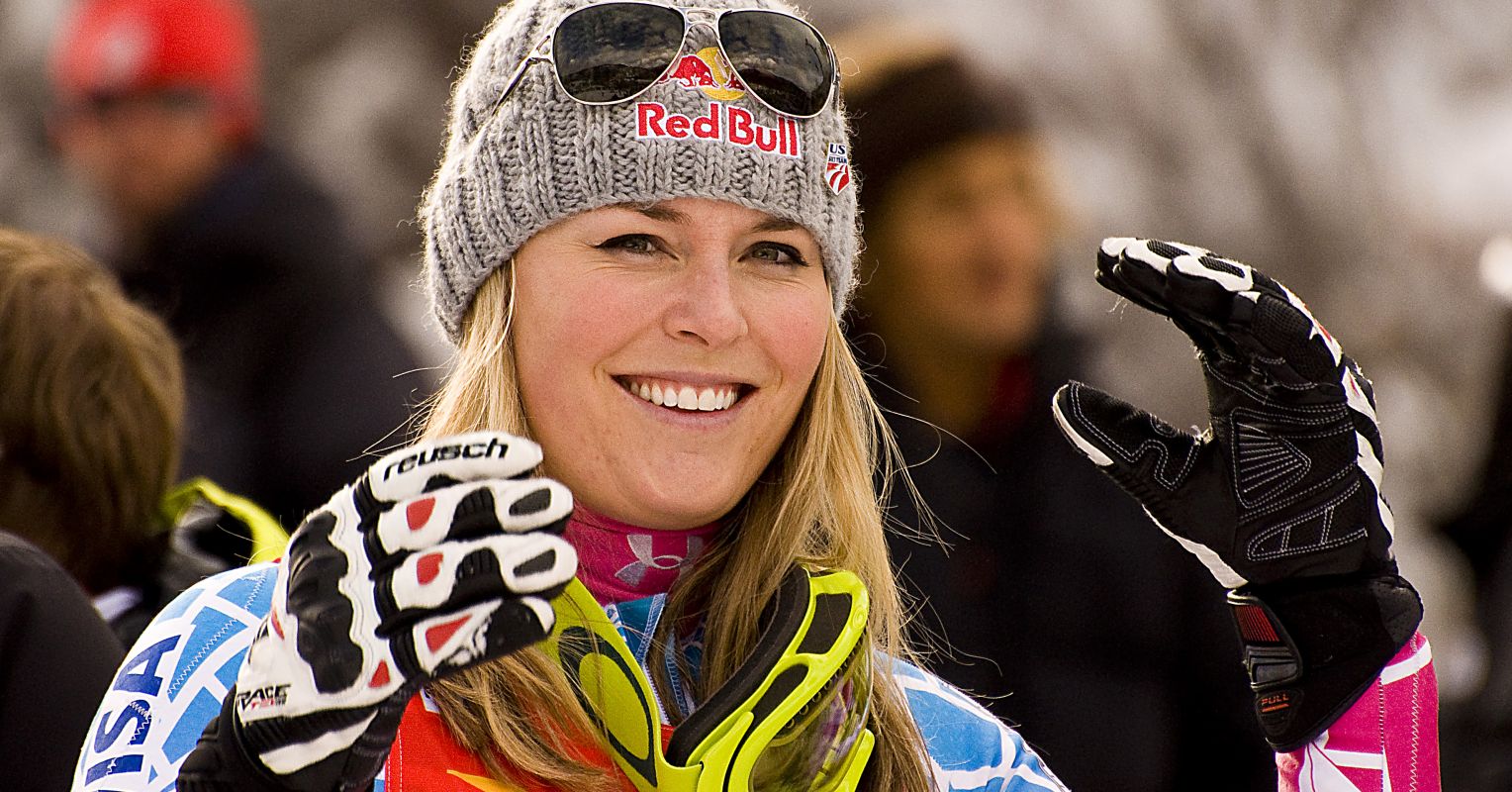
Watch the moments before Vonn’s run. She fires herself up and puts her game face fully on. Her breathing is fast, full, and forceful. Her face is tight. She bangs her poles and stomps her feet. At the same time, others around her yell “C’mon Lindsey”, amplifying that intensity. All of this combines into a state of very high mobilization and heightened vigilance.
Rhythm or Rigidity
But mobilization and vigilance come in two distinct forms. In one, the body is energized and rhythmically regulated. We accelerate but not at a constant rate. There is rhythm and flow. Heart rate increases but remains variable. Breathing speeds up but stays efficient. Muscles are powerful and ready yet supple. Sensory systems are alert but open and responsive. This is what allows adaptive precision at very high speed.
In the other, we go too far and tip into forced rigidity. Regulation drops away. Physiological rhythms flatten. Muscles stiffen globally. Attention narrows. Like a runaway train, we continue accelerating with urgency while giving up awareness and agility.
Both states can feel intense and provide a sense of control, yet only one supports optimal moment-to-moment adjustment and flexibility.
When the nervous system becomes overly mobilized and locked into constant acceleration, even before action begins, performance can suffer. Sensory accuracy, motor control, and timing can degrade. Attention can prioritize speed and direction over context and variation. Changes in pupil dilation can make subtle or low-contrast conditions such as flat light, shadows, or uneven terrain hard to interpret accurately. Movement can become clunky as muscles co-contract.
All of this can combine to compromise the fine motor adjustments and sensory feedback necessary for restoring balance amidst dynamic variability. The result is a paradox whereby more effort and intensity can lead to less adaptability and poorer performance.
Grit Has a Ceiling
Our cultural commentary reflects a deeply held belief that perseverance, toughness, and a fighting spirit are the ultimate solutions to adversity. And in many ways, they can be. Grit often helps us push through pain, fear, and fatigue. It can fuel extraordinary achievements and a relentless fight to keep going. But physiology also tells us that grit has costs and a ceiling.
The same qualities that make someone resilient, like Vonn’s commitment, fearlessness, and relentless drive, can push the nervous system into a state so highly mobilized and vigilant that it undermines the feel and fluidity of optimal performance. This does not mean grit is wrong. It means grit alone is insufficient as a performance strategy. It also means that pushing ourselves through pain or injury, or channeling pressure into an unstoppable force, does not always lead to the best outcome. At times, it can take us over the edge.
Downhill skiing simply makes these trade-offs visible. The same pattern shows up anywhere the stakes are high and consequences matter. When that happens, we often double down with more effort, more force, and more grit. We are told that this is what the champions do. Sometimes it works, especially in the short term. But when conditions require nuance, precise timing, pivots in strategy, or fine-tuned adjustment, intensity without rhythm becomes costly.
The real nuance of intensity and intention lives in the physiological rhythms beneath them. Heart rate and breathing rise and fall in coherence with changing conditions. Muscles contract and relax to deliver strength and power in harmony with finesse. An undistractable focus on outcome and strategy coexists with open awareness of what is actually happening.
We could argue that Vonn’s physiological rhythms were already disrupted by injury, an obligation to compete, and public evaluation, and that her best chance was to elevate that pressure into higher and higher levels of intensity and mobilization. That’s what she did.
We could also argue that because she was already closer to her physiological threshold, the more accommodating strategy would have been to slow things down, widen the margins, and ease herself into the race with greater range and flexibility. But that’s not her nature.
We could even argue that downhill ski racing itself teeters at the edge of this tradeoff. In Vonn’s own words, “the difference between a strategic line and a catastrophic injury can be as small as five inches. I was simply five inches too tight on my line.” At that level, intensity, intention, and physiology are too inseparable to dissect.
Regardless of where we land in this debate, there is a variable beneath the choices, commitment, and character we tend to focus on: The state of the nervous system, and the flexibility it has available under pressure, plays a vital and often hidden role in performance and access to our highest potential.
Beyond Lindsey and the Olympics, how we perform in the moments that matter most is not determined solely by how hard we push but by our state and how much flexibility we have available to work with.

