

970x125
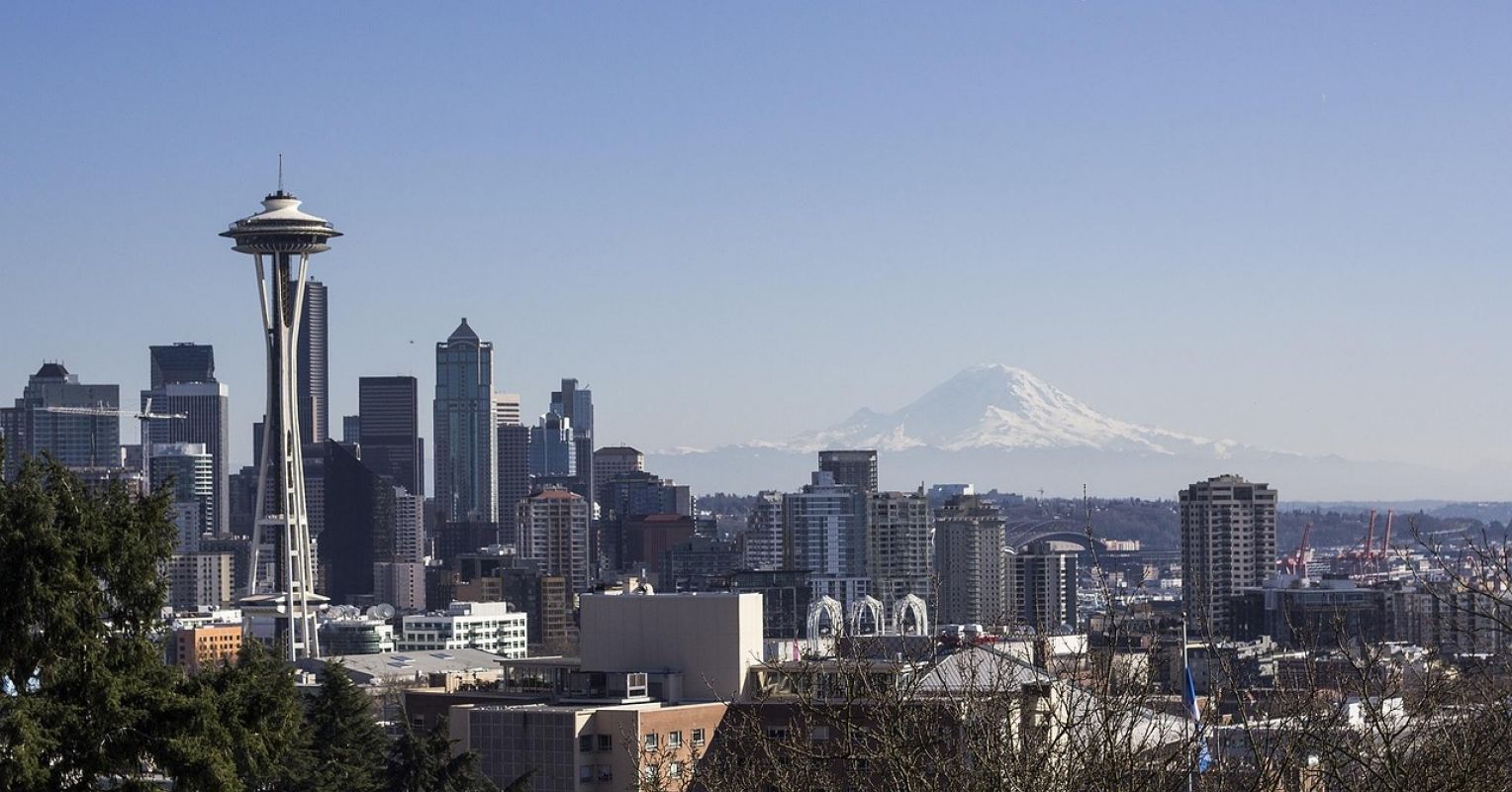
Susan (not her real name) deplaned from Seattle-Tacoma International Airport on October 31, 2024, only to see rental car employees welcoming customers in Halloween costumes. It was her first impression of her new home, a metropolitan area of four million people.
She knew no one there.
At age 24, Susan was fresh out of a graduate program in the Southeast and venturing into her first professional position. She was leery about the “Seattle Freeze,” the notion that residents in the city tend to keep to themselves and avoid pursuing new friendships.
She found three random housemates on Facebook, who quickly became her first social support network. In just a few months, her circle had grown to include friends from running groups, ultimate frisbee leagues, and community environmental activism groups.
“I feel like it was easier to connect with other transplants,” she said. “Everyone seemed to revolve around hobby-based communities.”
Susan’s adjustment to a new city was relatively smooth, which unfortunately may not be typical for Seattle…or other US cities for that matter.
Aaron Hurst wants to change that narrative.
Hurst, a foremost social entrepreneur and expert in life purpose/fulfillment, faced the challenge first-hand in moving from Brooklyn to Seattle nearly 11 years ago. He was aware of the “Freeze” and, in seeking to become connected to his new home, he hosted biweekly dinners of 6-8 relative strangers to hear about their Seattle experiences.
“There were a lot of people who struggled with this [Seattle Freeze] issue,” he noticed, particularly with the “constant waves of newcomers coming into Seattle,” that number being about 150,000 people annually.
About the same time, he observed a shift in his corporate work. “I saw that there are major changes happening in our world where people’s psychological needs were starting to play a much bigger role in the workplace,” he said, leading him to write The Purpose Economy in 2015.
The COVID-19 pandemic deepened Hurst’s concern about social bonding. “We’ve lost our capacity to connect as a society,” he observed.
“I looked around the country, and it really struck me that the #1 problem we have right now is our decline in connection and trust,” he said, adding that national leadership to support this problem is lacking.
Hurst launched a social health initiative called the United States Chamber of Connection in 2024 to help transplants gain social connections in metro areas. Via his non-profit endeavor, he hopes to spark a movement to increase social connection and trust in the US.
The program is founded on “Six Points of Connection,” which are rooted in research in psychology, sociology, and urban planning. The points outline daily behaviors designed to strengthen individuals and broader communities.
One principle, neighborhood contact, highlights the importance of relationships among residents in a community to heighten resilience and safety. Another point addresses the crucial need for a neighborhood “third space,” a place other than home and work/school for people to gather for social bonding.
The points have different benefits, Hurst stressed, yet using only one of them would be insufficient for a person to achieve genuine social connection. In addition, they are actionable and measurable.
The “Six Points” served as the foundation of the “State of Connection in America Report” issued this month.
The Chamber of Connection is a national model, yet locally driven. Hurst and his team are currently focusing their efforts on helping transplants to Seattle. They formed a “Welcome Committee,” a group of 45 leaders from various industries and sectors before collaborating with the City of Seattle government to develop an initial onboarding program for new residents.
Hurst prototyped the “Six Points” with new Seattleites, asking them to peer-coach in pairs with each of the concepts. The feedback included comments such as “this is so helpful” and “why is this only for new people to Seattle?” Based on this input, the curriculum was expanded into a seven-week, online course available globally.
Participants are asked to seek other community members for intentional discussions on one of the six Points. “What we’re finding is that it’s bringing up insights that are really powerful because it’s closer to their actual social system,” he said, “but it’s also strengthening their relationship with someone they already know.”
The program design has two purposes: In addition to aiding newcomers, Hurst hopes that existing residents will be motivated to provide a welcome to the city.
The design can be easily replicable for other interested cities. Hurst envisions “chambers of connection” in 50 US cities by 2030, noting that 12 million Americans move at least to a different county annually. “Ultimately we believe that every city and town in America needs to have a Chamber of Connection,” he said. The hope is that a social connection “chamber” is as common as a public library.
The need for social connection is, in his word, “universal.” It is “the only issue right now that affects everybody, every demographic. Everyone can do something about it, and you can’t do anything about it on your own,” he said.
Now a Seattle resident for 15 months, Susan feels settled in the Pacific Northwest. “At this point, I feel pretty at home in Seattle…I credit my sense of belonging to the great community I have,” she noted.
With the help of the “Chamber of Connection,” Hurst strives to hear the same comment. And as often as he can.

