
970x125
If you’re someone who rejoices at self-serve checkouts, automated banking, or online shopping—and I’ll admit, I tick two out of three of these boxes—have you ever stopped to think about how taxing these shifts might be on the incidental social interactions we have with others?
Recently, while reading Why Brains Need Friends: The Neuroscience of Social Connection—And Why We All Need More, I realised just how much these incidental social opportunities are diminishing. Life gets busy, and we favour convenience and simplicity to make our hectic lives more manageable. But at what cost to our social habits? And what do we now need to do to strengthen them?
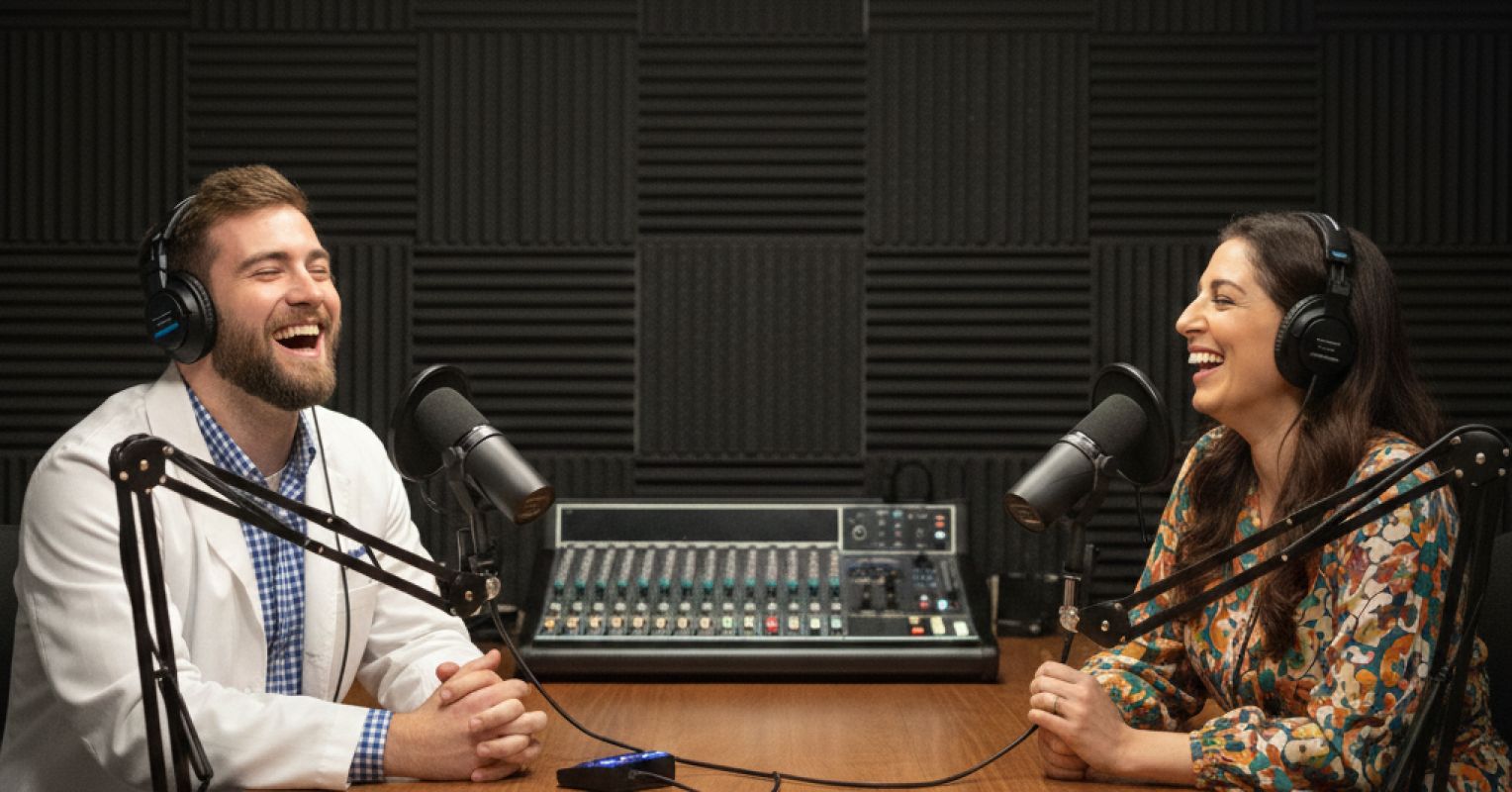
I could not think of a better person to ask than the author himself, Stanford neuroscientist Ben Rein. Below are the questions I have been wanting to ask since reading his book.
Kelly-Ann Allen: How much of our daily social interactions are shaped by our own cognitive biases and mindsets? I was struck by how often we misjudge our own social competence and the perceptions of others. Can you tell us more about the biases we carry into everyday social situations?
Ben Rein: Humans suffer from a rather unfortunate pairing of features: 1) an intense dependence on social connection for brain health, and 2) a tremendously high likelihood of psyching ourselves out of interacting. There’s a ton of research out there showing that people tend to let anxieties get in the way of connection: We fear that conversations will go poorly, we anticipate that we will be rejected at far higher rates than we actually are, we underestimate the value of connection, and we also judge ourselves as worse at interacting than we really are.
However, it turns out that these biases (and many more that prohibit connection) are often totally wrong. In a world where it feels like we’re increasingly settling for nights on the couch over meeting up with friends, I worry that these biases are really taking root and furthering our already-bad social problem.
K-AA: Like many people, I sometimes feel shy about starting conversations. From your work, it seems that most people feel the same way. But when waiting somewhere together, we’d likely enjoy some incidental conversation. How can we initiate impromptu conversations in a way that does not feel uncomfortable, especially when breaking a silence that we have become very comfortable with?
BR: We exist in a culture where it’s often frowned upon to start spontaneous conversations with strangers. Or at least, it can feel that way. This is less-than-ideal for a species that benefits greatly from connection.
However, research shows that people are actually much more receptive to social advances than we expect. In one study, people on a train predicted that 50 percent of the strangers they approached to chit-chat would turn them down. In truth? Not a single person said no—and the strangers even shared that they felt better after the interaction! In many cases, we just have to bridge that gap confidently. Many people are waiting for permission to be social—you just have to be the one to give it.
K-AA: What happens in relationships when people have different social needs? You introduce the idea of a social diet; can you explain how this can be applied in households where people want very different levels of social interaction?
BR: Just as our bodies require different caloric intakes and we have different food preferences, our brains have unique social needs. We all have preferences that shape our individual “social diet.” Extroverts may require a high volume of interaction to feel nourished, while introverts reach satiety much faster. Some people may enjoy the cramped environment of a bar on a Friday night, while others may prefer the peaceful, quiet environment of a coffee date on one’s own couch.
We absolutely need better education around this, and I think it starts with introspection. By “social journaling” (taking notes about how interactions made us feel) and trying to figure out your own “social set point,” you can communicate your needs not as a rejection of others, but as a biological requirement for recharging.
K-AA: How have broader changes in society shaped our social habits, and what kinds of reform are needed? How much responsibility sits with individuals, and how much should governments and institutions be held accountable?
BR: Our social landscape has shifted remarkably fast. In less than a decade, the time we spend alone has increased by over 36 hours per month. We opt for ATMs instead of human tellers; we order groceries delivered to our door instead of immersing ourselves in our local community; we work or exercise at home instead of going into the office or gym. It seems that digital convenience has quietly replaced the small, “incidental” human connections—like chatting with a grocery clerk or a bank teller—that our brains evolved to crave.
I think we can improve this by interrogating our micro-decisions to restore these interactions. We opt for the cashier instead of self-checkout, etc. But on a broader level, we really need to build more social infrastructure to restore these interactions. We should work deliberately to create gathering spaces, organize in-person events, and even perhaps enact policies that incentivize gathering and community-building. We need to make connection feel natural rather than effortful.
K-AA: How social is social media, really? What impact might bans or restrictions have on young people, and how can parents navigate these effects?
BR: I’m generally a skeptic of social media. In fact, I think it’s a misnomer: People who spend more time on social media show the opposite effects of socializing (higher rates of anxiety, depression, and loneliness). It appears that social media impacts the brain more like isolation does.
I believe in-person contact is the best, and I especially think it’s important to have meaningful in-person contact in early life. That’s because the social experiences we have as children play an important role in shaping our brain development and helping us build moral models of the world. Those experiences essentially teach us the Golden Rule: Do unto others as you would have them do unto you. You learn that hurting others is bad and that the way you treat others has consequences.
As a new dad, I will be cautious about my daughter’s use of social media. I’d much rather have her learn these lessons in the real world than in the murky, artificial digital environment social media offers.
K-AA: What is your single best tip for strengthening social connection in everyday life?
BR: Don’t be afraid to connect. Smile at the strangers you pass and compliment them. Call up old friends. Don’t flake on plans. You will be amazed at how these small changes impact your mood. Even better, your brain will thank you, and you will be healthier in the long run.

