

970x125
If you have ever marveled at a murmuration of starlings or the harmonious motions of a school of fish, you may have wondered how these species achieve such communion of action. Apparently, even the biologists who study such questions are still wondering. By what instinct can thousands of birds fly as a coherent unit? They don’t need to practice for hours, days, and weeks on end, like our marching bands. And yet, we humans might also have some instinct for harmony.
The Incoherent Mind
In the practice of psychiatry, we like to think we have better radar than most doctors for identifying incoherent thinking in our fellow humans. Incoherence is one of the crucial signs for potential disasters in the central nervous system—delirium, psychosis, mania, intoxication, stroke, encephalitis. And yet, now in the waning years of my career, I confess that I’ve practiced this skill of identifying incoherent thinking with only the vaguest definition of coherence, and no measure. For me and most of my colleagues, identifying the incoherent mind is more of an art than a science.
But writing a book recently about our stress response system (Toxic Stress, 2024) got me thinking we doctors—no, all clinicians—should take a closer look at how we think about coherence on several levels, and take a tip from engineers. In the engineering world mechanical coherence refers to the extent to which two or more oscillating systems are synchronized, or coherent. The laser beam, for example, synchronizes two bands of light, both temporally and spatially, to achieve a sharp focus and a narrow frequency, a highly coherent light system compared to sunlight.
Personal Coherence
To the extent that we can think of our body as a complex system of systems, particularly our stress response system, does it make sense to ask if our bodies operate by some form of mechanical coherence? Applying the concept of mechanical coherence to our bodies, with all its component organ systems oscillating in various rhythms, quickly becomes a forbidding intellectual feat for most scientists.
And yet we all do this daily, from birth to death, at least intuitively. That is, we have evolved a sophisticated sense for how harmoniously synchronized our own organ systems are—our brains with our hearts, our muscles with our nerves, our hormones with our digestion, our immune system with our energy system, and each organ with all the others. When we’re fit, fed, and well rested, we feel good—that’s high “personal coherence” on a physiological level. When we feel bad or sick, maybe one or more of these systems is not functioning in harmony with the others; that would be low “personal coherence.”
Modern medicine has plenty of measures for the functioning of each of our organ systems. Cardiologists, pulmonologists, gastroenterologists—every specialty has its tools and measures for its organs. But so far, modern medicine has no standard measure for the coherence of the whole system. We rely on our patients’ intuitive sense of personal coherence and their ability to function well to tell us if they are healthy.
Heart Rate Variability
One of the major voices promoting this concept of personal coherence belongs to Rollin McCraty, PhD, the director of research at the HeartMath Institute in Boulder Creek, CA. In a review published in 2017, McCraty summarized the evidence for heart rate variability (HRV) as a sound measure of personal coherence, based on some promising research over the prior three decades showing that HRV correlates strongly with good health, emotional regulation, and the efficient functioning of several major organ systems, especially the heart and the brain. HRV measures go up with fitness, relaxation, and restful sleep, while they go down with age, severe stress, and most chronic illnesses.
Social Coherence
Though the use of HRV measures for general health has been studied for several decades, McCraty’s term “personal coherence” has not yet found common use in mainstream medicine. In his 2017 review in “New Frontiers in Public Health” McCraty proposed extending the concept of personal coherence to social coherence, which he described as “pairs, families, groups or larger organizations in which there is a stable and harmonious alignment of relationships that allow for an efficient flow and utilization of energy and communication required for optimal collective action.” One intriguing feature of social coherence, he suggests, is “physiological synchronization,” citing research on mother-infant bonding, speakers and listeners, and couples’ sleeping patterns to support the notion that people can unconsciously synchronize key physiological patterns in concert with others.
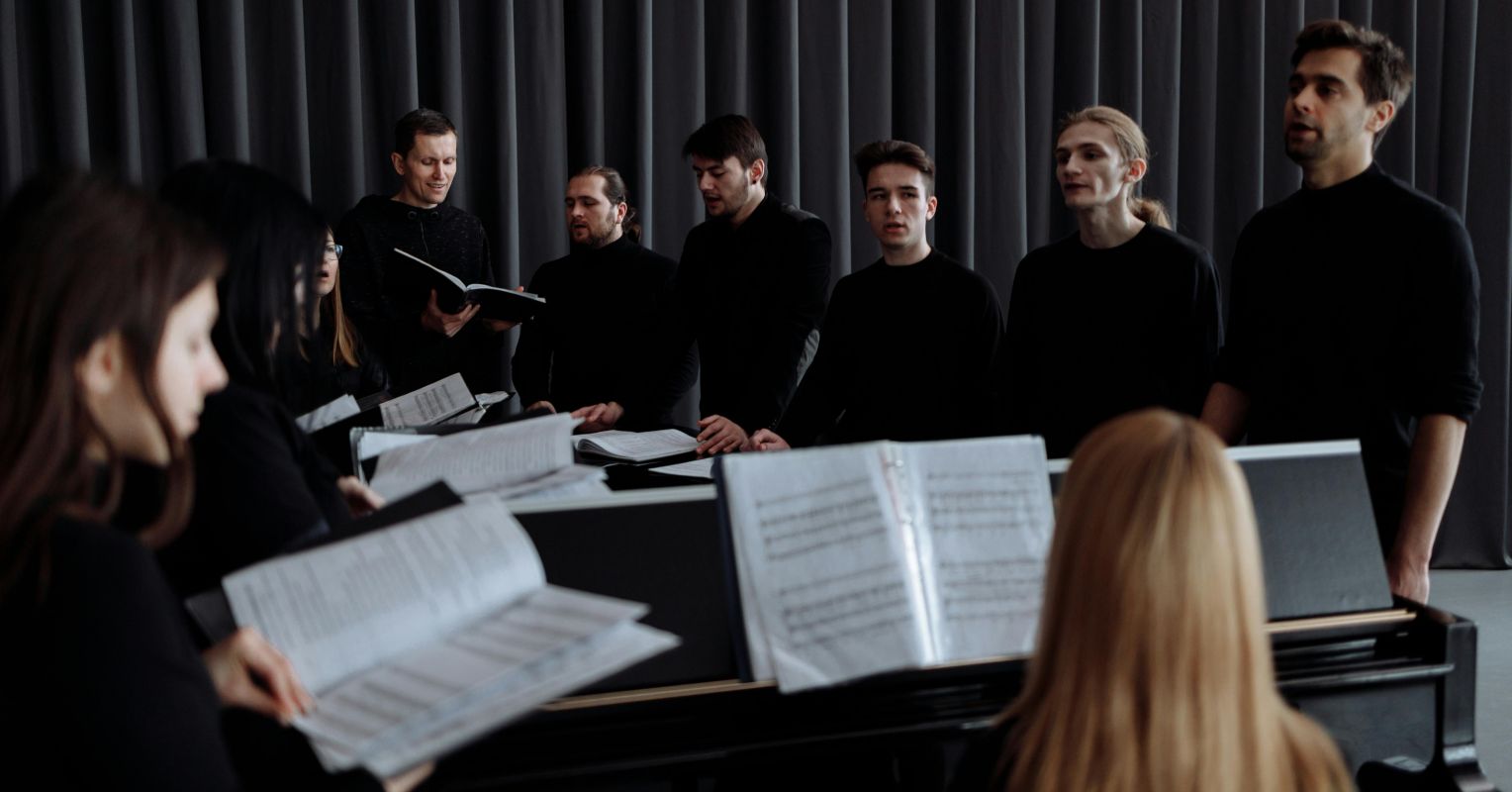
This is a fascinating idea. Are we as a species capable of synchronizing our physiologies when we also harmonize our thoughts and behaviors? Do members of an orchestra synchronize their hearts as well as their instruments? Do members of an audience share a common physiologic state while listening to a speaker or watching a performer? Are humans in a line dance capable of something close to the harmony of a beehive or the murmuration of starlings? Answers to these questions could open the way to a deeper understanding of how we humans make and lose contact with others.
HRV Biofeedback
Another fascinating aspect about this idea is that in the decade since McCraty proposed the development of social coherence research, relatively little formal research has been published about it. One of the barriers has been technology. Monitoring HRV for a single person in a laboratory is complicated, and interpreting HRV data is even more complicated. In spite of popular wearables that record a rough estimate of “HRV,” only in the past five years has it become practical to record and interpret scientifically rigorous HRV data for individuals in daily life outside a laboratory. Now, says McCraty, we can begin to apply these HRV technologies and HRV biofeedback to groups.
McCraty’s team has proposed that one way we might be sensing the inner states of those close to us is through our heart’s electromagnetic forces. This force from the heart is apparently five times stronger than that of the brain, and his group has shown that it is possible to record the electromagnetic signal of a person’s heart up to five feet way. Whether we sense that signal and how remains to be clarified.
The HeartMath Institute has for many years developed both hardware and software for collecting HRV data. In 2022 McCraty published a history of HRV research at HeartMath. The story, as he presented it, is a scientist’s dream career, closing with his hopes for applying a science of social coherence to the betterment of our social and physical lives by exploring “group coherence and synchronization and if and how this is associated with increased group performance, pro-social behaviors, cooperation and improved communication.” Who could argue against such a mission?
A Science?
What puzzles me is that in several searches through Google Scholar I can find no publications or reviews of research on social coherence since 2022, not even by McCraty himself. As respectable as his work has been over the past three decades, it has always needed confirmation by investigators who are not supported by the HeartMath Institute or other institutions that benefit directly from HRV research.
To flourish as a branch of science, the field of social coherence will need working definitions, protocols for measuring HRV coherence in groups, and guides for interpreting data on social coherence. Until then, we have a promising idea that has made its way to the marketplace, but is still waiting to be rigorously studied—a reminder that science moves more like a glacier than like a murmuration of starlings.

