

970x125
Sour Minnows is the type of film that will ensnare and captivate half its audience while completely alienating the other half. If you are in the first group, you will likely find yourself entranced by the broken storyline and by the questions that the film asks. The other half will find themselves frustrated with the lack of answers and the constant resets. And I think both sides are right. Sour Minnows, which recently had its world premiere at Fantasia Fest, follows an intriguing, yet stilted path, and asks a lot of questions that it can’t or won’t answer. But it explores a lot of interesting ideas that will captivate and frustrate audience members in equal measure.
The film stars David Brown as Ricky, a film nerd living an imperfect and lackadaisical life in Los Angeles. He has a job that he hates (listening to and reviewing AI transcripts), a roommate whose company he enjoys (Tepper, played by Chase Williamson), and a romantic prospect in the form of Aura (Suzanna Son). He and Tepper both have ideas of things they want to do and projects they want to work on, but nothing is actually materializing.
While walking home from the grocery store, Ricky and Tepper come across a strange sight – a small group of people, kneeling down in the road, licking the asphalt. It’s a weird moment, played as almost a secretive, sexual act that they have unwittingly disturbed. They journey on, with no knowledge of the importance of that moment in time, or the impact that it will have on their lives as they move forward.
From that point on, life takes on a strange bend. The boundaries of reality seem softer, more pliable. Ricky suddenly finds himself losing time; he will be out in the world, minding his own business, and then suddenly he finds himself in a completely different location – sometimes even mid-conversation. Things he claims to remember seem to never have happened, and he has no memory of what he was doing even a few seconds ago. Is he slowly losing his mind, or is something more complex taking place?
Harrison Atkins’ film is a complex one. It plays at being a sci fi film, a hang-out comedy, and a psychological think piece, while never fully committing to any one genre. It examines much of the minutia of our present reality (the always lurking presence of AI, our own isolation, the constant sense of uncertainty) and then begins to ask questions surrounding the idea of that reality being upended in a grand, but unknowable way.
Many of the themes and questions raised by the film are born out of that concept. How do we react when faced with the impossible? How do we process something that big, and move forward with it? Some might panic, while others will embrace it. Will we struggle with the truth? Or will we find stability in the unknown?
The film is unsettling, but in a way that is difficult to describe. Much like the way Ricky and Tepper struggle to get a hold on their reality, the themes of the film ebb and flow, and are difficult to pin down. We see them not understanding the space they find themselves in, we see their confusion and their fear (very well communicated, I might add), but we are at a loss for the full context of the moment. We don’t understand the boundaries of this new space any better than they do. In the end, Atkins’ audience feels as adrift as his characters in their new reality.
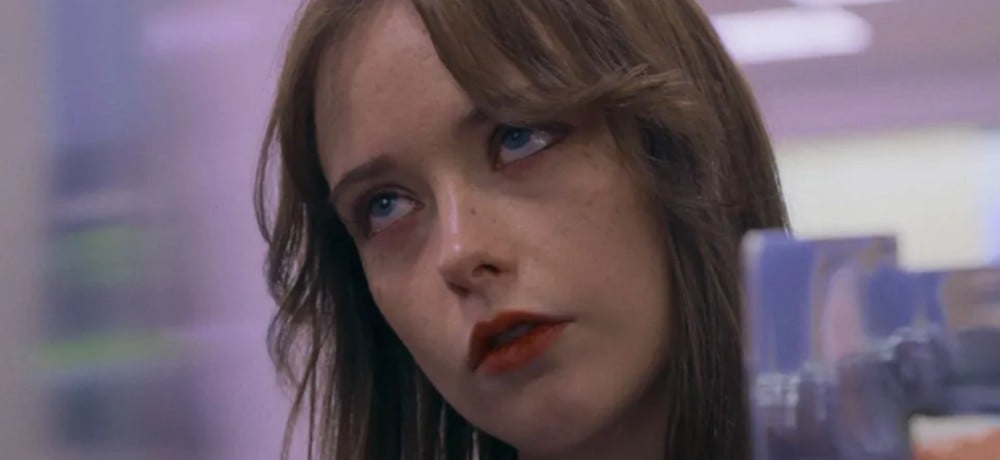
Atkins does a great job of cementing this uneasy atmosphere with the way he shoots the film. From the opening scene, we have a lot of close ups and uncomfortable camera angles. Claustrophobic moments give way to panning shots that seem directionless and surreal. We are along for the ride as much as the characters are. Sour Minnows isn’t a film that is going to play for everyone, but it knows that. It’s very aware of what it is and it has no intention of trying to make audiences comfortable. It sitting with that discomfort is what makes it so interesting.
Movie Score: 3/5

