
970x125
Sidney Williams revisits Michael McDowell’s The Elementals from 1981, a novel of blood, family and sand
I suppose it’s apropos that I really discovered Michael McDowell (1950-1999), author of 1981’s The Elementals, via a weather incident. I’d seen the paperbacks that serialized his long novel Blackwater (1983) for a while when I picked up the first book used at my favorite used bookstore. I nabbed a couple more new at my local Waldenbooks, thinking I’d have them when I was ready to read them.
But in Louisiana where I grew up, winter could sometimes brings weather surprises. Ice storms hit on occasional winters, not fun and fluffy snow events. These were brutal, showering downpours of freezing rain that would coat tree branches and pine needles and knock out power lines. You’d find yourself trapped at home a while.
I picked up the first paperback, The Flood, to read by kerosene lamp. I was drawn into McDowell’s flooded Alabama as soon as I gave the book a chance and I zipped through the volumes I had on hand as the family saga with a supernatural twinge unfolded.
I had an uncle by marriage from Alabama, so a lot of the family matters resonated because I’d heard stories of his family.

Paperback edition of The Elementals, (Avon October, 1981)
I wanted to go to Waldenbooks to get the next volume as soon I finished all I had on hand, which did not take long. I probably had the first four, so I must have made it through The Levee, The House and The War. I needed to grab The Fortune and Rain to finish the story.
My dad said roads were still too hazardous even though we’d had a bit of melting. I had to wait several more agonizing days before I could head out to purchase the final chapters, but I’ll always remember that winter fondly in spite of the hardship.
I never met McDowell, but I saw him on a panel a while later at a World Fantasy Convention. I attended several as I was working to learn about writers and writing. He was on a panel moderated by Dennis Etchison.
McDowell was an Alabama man and he spoke with a Southerner’s speech, a bit slower with longer vowels. The accents of different Southern states are actually quite pronounced, and his was distinct.
By way of introducing himself, he spoke about the film he’d been working on. It’s what would become Beetlejuice, but as he put it…
“It’s the stoooory uv ah faaaaamily that moves to rural Vermont…”
“And I bet something bad happens,” Etchison injected in his crisp and quick Cali speech.
That drew a laugh even from McDowell, and it stuck with me. I was definitely in line to see Beetlejuice when it opened, delighted to discover it was more than just a haunted house story.
That kind of gives you a sense of where McDowell fits in my reading life and my formative experiences. Going to cons was my MFA looooong before I ever signed up for a graduate course.
And as a reader, I went chasing the excitement of Blackwater. That meant dropping back to a book that was probably a staging for Blackwater.
The Elementals (October, 1981) creates its own world of horrors, and it comes close to catching the same Southern Gothic magic found in the longer saga.
It’s set mostly in coastal Alabama, and it clicked nicely for me because, while my uncle was from Atmore, he had stories of Mobile and other areas along the white sand beaches of the Gulf.
Sand is important in The Elementals as we meet the mingled Savage and McCray families at the funeral of the matriarch Marian Savage. McDowell introduces key characters with mentions of family members like Big Barbara McCray. (My uncle often spoke of an aunt in his family known as Big Momma, so that hit home.)
Family members also include Big Barbara’s son Luker McCray and his young daughter India. They’ve lived away and have returned with Luker’s marriage in the rear-view mirror. They’re of the family but with urban experience just a bit more outsider’s perspective.
Strangely at the funeral, the Savages produce a box with a shiny knife inside which is plunged into Marian’s heart prior to the pallbearers entering to take the coffin away to the graveside. It’s an introduction to the strange supernatural history and secrets that hover adjacent to the families.
Eventually the family groups including Luker and India head for Beldame, the family getaway where three old houses stand, one that’s been gradually overtaken by sand. Piles have sifted through cracks and opening and infiltrated bedrooms.
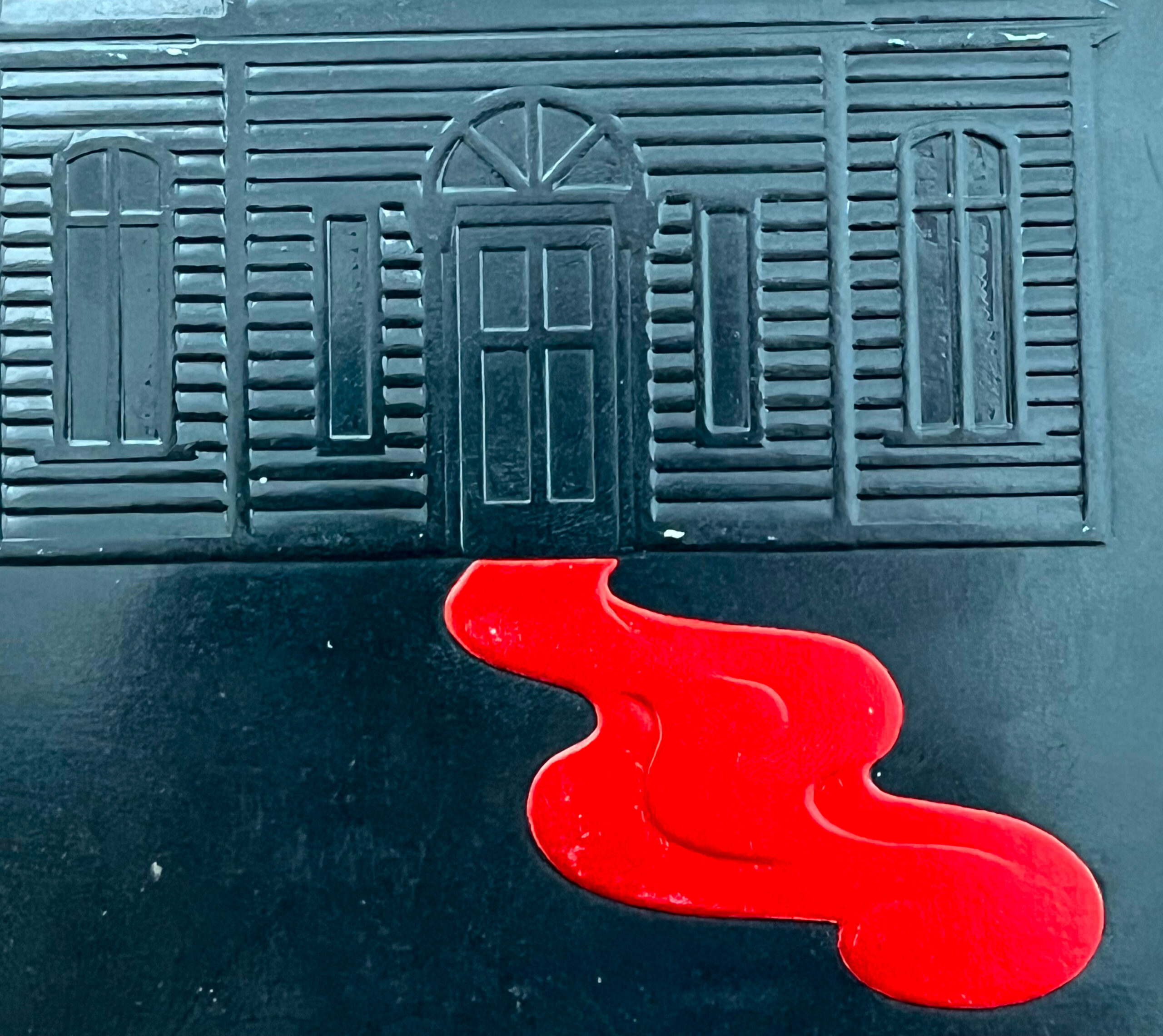
The cover art on The Elementals really seems to be the reverse of Dead White’s cover.
India begins to snoop around the abandoned house, noting strange phenomenon through the windows, and the reader comes to understand The Elementals are embodiments of sand, capable of killing and capable of taking the imperfect shape of humans. McDowell really makes the territory around the old Victorian houses real.
Odessa, the housekeeper has a bit of folklore knowledge and can offer a little help in warding off the dangers of the sand presences, but that’s not enough to defeat the strange capabilities altogether.
As family members fall, it’s clear anyone can die, and the Elementals are gaining power. They become more menacing, and Luker and India realize they must act. But how can they stop the strange presence that has plagued their family for generations?
The Elementals is eerie, atmospheric and totally engrossing. McDowell may have only aspired to tell a good story, but using his knowledge of Alabama and surroundings as well as Southern families, he crafted an authentic, layered and textured drama with families as important as in Blackwater.
It clocks at around 290 pages, but it feels large and it qualifies as what we sometimes today call elevated horror, but it never sacrifices unsettling suspense or building terror.

