

970x125
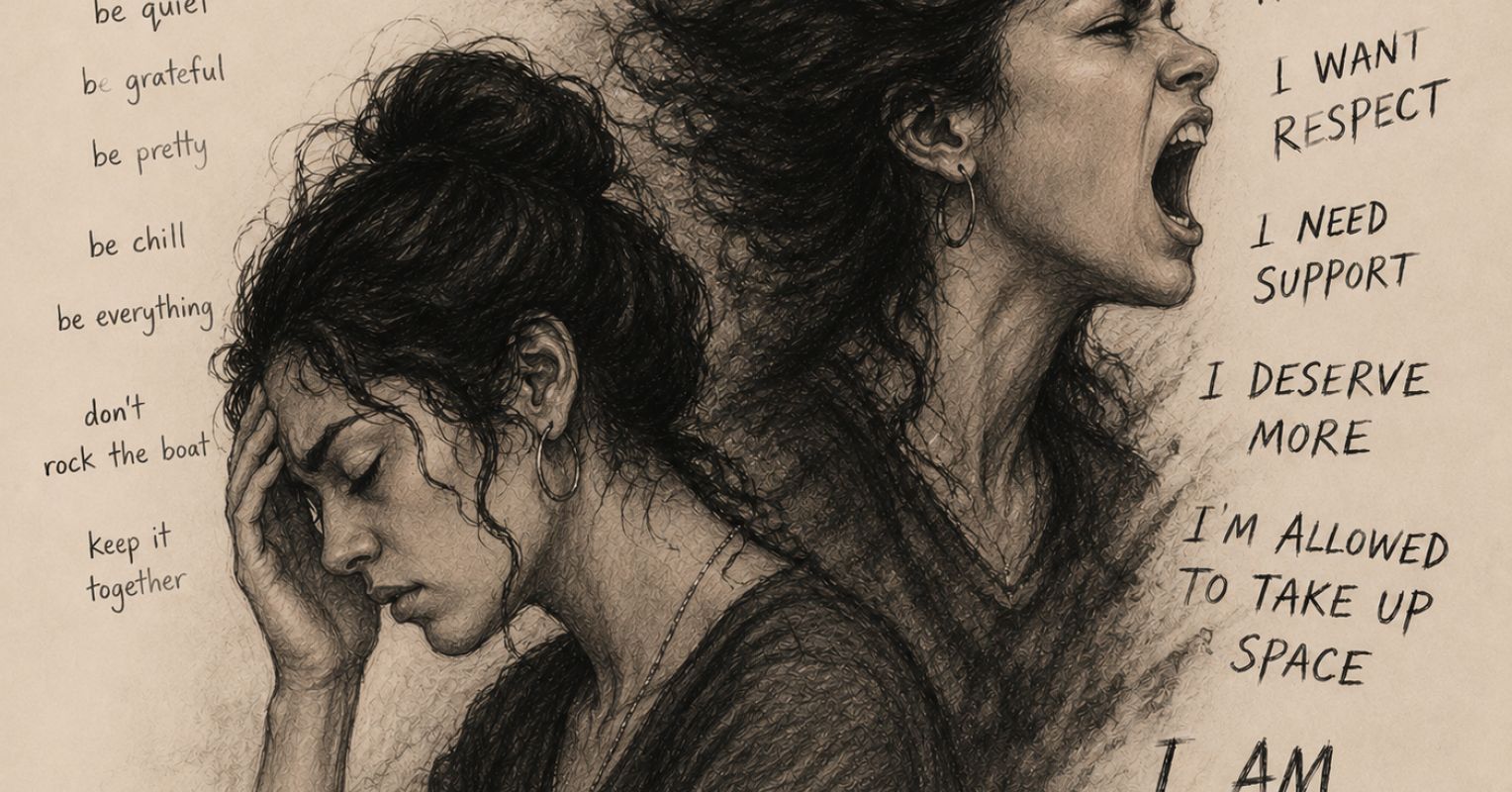
Women have higher rates of anxiety than men (McLean et al., 2009), but there may be more to this picture than innate biological differences. In my work as a clinical psychologist, I have come to observe that for many women with chronic baseline anxiety, what is being masked is anger. It can take several months of therapy as I give them permission to explore their real feelings, opinions, judgments, and desires before finding that the anxiety dissipates, and underneath is rage. Rage that their partners and families ask too much of them. Rage that their workplaces ask more from them than is reasonable. Rage that they are being treated differently because they are female.
Each gender is narrowly assigned an emotion that can function as an outlet for distress. Conversely, men are allowed anger. When running a men’s group at a VA when I was in training, I was afraid no one would attend. Instead, every man on the unit showed up for the group, as anger was one of the few socially acceptable feelings men could publicly express. Their own grief, loss, and humiliation in having served in Vietnam and returned to a country in contempt of them came out in anger. For women, anxiety is our socially sanctioned feeling.
The VA group that I ran was wisely entitled by my supervisor at the time—the late, great Dolly Sadow, Ph.D.—“Using Anger Constructively.” She knew that anger held wisdom to guide our behavior and energize us into action. For chronically anxious women, masked anger becomes not only confusing but paralyzing. Women lose a connection to what they need, and their distress has nowhere to go but inward.
Internalizing Distress
I refer to this phenomenon in women as the anger-to-anxiety pathway. The literature has long demonstrated that girls are taught to internalize their distress, rather than externalize it, which is permitted for boys (McLean & Anderson, 2009). Cutting, eating disorders, depression, and, of course, anxiety become ways women turn their pain inward and prevent conflict with others. Boys learn to externalize their distress, which can manifest as tantrums, outbursts, aggression, and explosive behavior. With attention-deficit/hyperactivity disorder (ADHD), girls often have the inattentive type, and boys often have the hyperactive type. Women are more likely to have eating disorders, and men are more likely to have alcohol and drug problems. Even our psychopathology is regulated by gender code.
A few common examples that can come up in clinical work illustrate my point. A chronic feeling that something is not right in their relationship or marriage. There is cheating or emotional abuse. Social anxiety about going out with friends when they don’t want to drink. Health anxiety about going to the doctor and not agreeing with the physician’s recommendations. Or straight women with dating anxiety because they are afraid to hurt a man’s feelings if they do not want to continue to date them. Work procrastination that is really a defiance of what her boss is asking her to do.
Some of this turns into anxious avoidance. Avoidance of the doctor, socializing, dating, and work tasks because they do not feel allowed to set boundaries. What helps in psychotherapy are gentle prods to uncover their true feelings, validations of their dissent, and role plays to model ways to communicate their wants. In time, the people in their lives become less puzzled and more clear on what these women need. Through this process, the women I work with are no longer chronically fearful, plagued by stomach issues and headaches, or avoidant of social and professional scenarios. Excavating anger over a protracted period leads to the creation of new friends, new partners, new jobs, new family dynamics, and even new places to live. Anxiety dissipates, and for the first time, these women with chronic anxiety no longer suffer but thrive.
Cultural Implications
The anger-to-anxiety pathway in women can have cultural implications. White women are allowed to be socially aggressive but not angry, and passive-aggressive behavior may become the only way they can be expressed. To take just a few examples of cultural norms for women of color, there might be a fear of being labeled the angry Black woman if irritation emerges, or for Asian women, pressure to conform to the model minority pressure and be palatable rather than pissed off.
In a study by Cox et al. (2010), “Who Me, Angry?”, they posit that a number of theorists describe this process as diversionary anger—how women try to bypass awareness of their anger and use indirect, socially desirable ways to cope, such as somatization of distress.
In her 2018 book, Rage Becomes Her, sociologist Soraya Chemaly explains how women deprioritize their own reactions and needs in favor of others and come to suppress their anger. She believes this leads to serious personal and political harm. Chemaly identified the double bind women face in the public eye: being labeled cold for not expressing anger and irrational when they do. Women walk a tightrope around what is acceptable for women’s emotional expression.
Mirowski and Schieman (2008) reviewed the literature on anxiety and anger across the lifespan and found that women grow angrier and more anxious than men in adulthood. The burden of domestic labor and caretaking contributes to women’s growing frustrations as they take on the “double shift.” Ross et al. (2006) quantitatively tracked this with a study finding that women’s anger quantitatively increases with each child they have.
The recognition of anger in my clients quickly turns to sobs, and I recognize this in my own tearful fury. It happens so quickly, our learned response to weep through our wrath. But women can transform chronic anxiety into purpose—if we are given permission to have opinions, to have judgments, to have agency, to say no. Our rage can become our path to healing injustice at both the level of the individual and collective, if we allow it.

