

970x125
Every culture on earth has invented a version of the same story. Someone makes a deal with darkness, gets exactly what they asked for, and loses everything that made them want it in the first place. This is either the oldest cautionary tale in human history or the universe’s way of saying that wanting things too much is the problem. Possibly both.
The template is so reliable it has survived more reinventions than most genres, showing up in ancient folklore, theater from the sixteenth century, Mississippi Delta blues, and a 1997 Al Pacino film where the devil runs a Manhattan law firm, which is honestly the most plausible setting the story has ever found.
Doctor Faustus and the Original Paperwork
The deal with the devil as Western storytelling knows it starts with the German legend of Johann Georg Faust, a real historical figure from the early 1500s whose reputation for dark arts grew considerably after his death. By the time Christopher Marlowe adapted him into Doctor Faustus around 1592, Faust had already become shorthand for a man who traded his eternal soul for power and forbidden knowledge.
Marlowe’s Faustus gets twenty-four years of demonic assistance, summons Helen of Troy, and spends the entire back half of the play desperately not thinking about what comes next. He traded his immortal soul for the intellectual equivalent of a Wikipedia subscription.
Goethe’s Faust, published in two parts in 1808 and 1832, complicated the template. Goethe’s version ends with Faust being saved, which is either deeply reassuring or a massive loop in the contract depending on how you read it. The devil, Mephistopheles, loses on a technicality. Lawyers have been insufferable about this ever since.
The word “Faustian” entered the language as shorthand for any bargain where you get what you want at a cost that turns out to be everything. It is used now to describe political compromises, corporate mergers, and at least three separate think pieces per year about social media.
The Crossroads
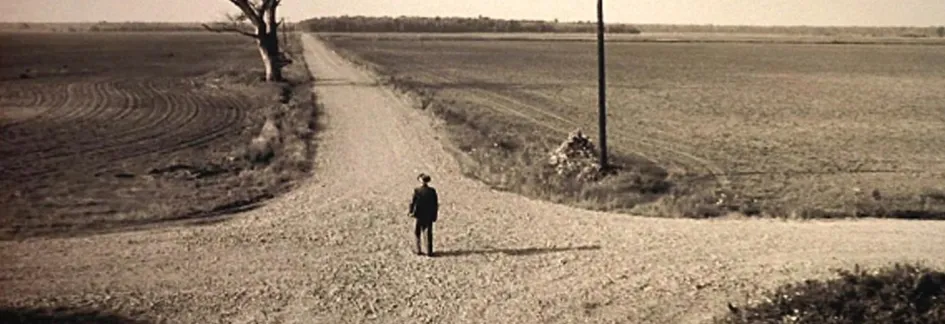
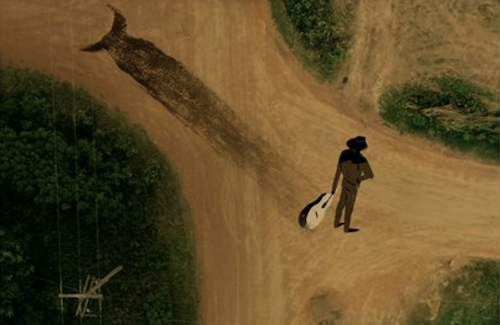
On the other side of the Atlantic, the deal with the devil found a different address. American blues mythology, particularly the tradition of the Mississippi Delta, attached the story to a specific location. The crossroads, where two roads meet at midnight, and where a man could wait for the devil to appear and tune his guitar.
The musician most associated with this mythology is Robert Johnson, who recorded twenty-nine songs in 1936 and 1937, including “Cross Road Blues” and “Me and the Devil Blues,” and died in 1938 at twenty-seven under circumstances that remain unclear. He was a remarkable guitarist who appeared to have improved dramatically in a very short period of time. The crossroads story about him developed and calcified after his death, told and retold until it became inseparable from his music. Robert Johnson himself never claimed any of it.
The person who actually did claim it was a different man entirely. Tommy Johnson, a Delta blues musician with no relation to Robert, reportedly told people on multiple occasions that he had met the devil at a crossroads at midnight, handed over his guitar, and gotten his talent in return. Tommy Johnson is considerably less famous than Robert Johnson, which is maybe the devil’s way of making a point about contract terms.
The crossroads mythology fed directly into O Brother, Where Art Thou? (2000), where the Coen Brothers dropped it into the middle of a Depression-era Odyssey adaptation because if you are already rewriting Homer you might as well rewrite American folklore while you are in there. It lives in every story about fame that arrives too fast, talent that appears from nowhere, and deaths at twenty-seven. The 27 Club has been run through the Robert Johnson mythology so many times that the connection has become its own piece of pop culture, self-sustaining and impossible to dislodge.
The Devil Grows Up
The devil of medieval Christianity and the devil of the crossroads deal mythology are related but not identical. The biblical Satan is primarily an adversary, an accuser, a figure whose role in early scripture is closer to a prosecuting attorney than a red-skinned tempter in a top hat.
The smooth-talking deal maker who shows up at crossroads and in horror films is a mash up of all of this. The biblical adversary, the folk devil, and a few centuries of storytelling that collectively decided the most interesting version of evil was one that made you an offer. The modern devil does not attack. He negotiates. And he always has better real estate.
Hollywood Signs the Contract
Hollywood has been making devil movies for as long as Hollywood has existed, and the quality varies in ways that suggest not all of those productions made favorable deals.
Angel Heart (1987) is the best film about a deal with the devil that never once uses the phrase. Mickey Rourke plays a private detective hired by a man named Louis Cyphre (Robert De Niro) to find a missing person, and the movie spends ninety minutes letting you work out what Louis Cyphre is an anagram of while everything gets worse. De Niro arrives in a cream suit eating hard-boiled eggs and the film is essentially already over.
The Devil’s Advocate (1997) casts Al Pacino as the literal devil running a Manhattan law firm and hiring Keanu Reeves as his star attorney. This works completely. New York in the nineties, of course the devil ran a law firm. The casting of Pacino is either inspired or the only possible answer to the question of which living actor could play Satan and make it seem like he was doing you a favor.
Crossroads (1986) sends Ralph Macchio into the Mississippi Delta to hunt down a lost Robert Johnson song and ends with a guitar duel between Macchio and Steve Vai, who plays the devil’s champion. The film climaxes with a Juilliard-trained classical guitarist defeating a blues devil deal using a Bach-influenced technique, in the Mississippi Delta, in front of a crowd that does not find this strange. Nobody in the film finds this strange.
Drag Me to Hell (2009) is Sam Raimi’s argument that you do not need to want power or knowledge or fame to end up on the wrong side of a supernatural contract. Christine Brown wanted a promotion. She denied a mortgage extension to an elderly woman. The punishment is an eternity of damnation. The moral is that the universe does not proportion its consequences to the scale of the ambition, which is either a theological horror show or a description of most Tuesdays.
And then there is The Witch (2015), where Robert Eggers quietly made the deal the ending rather than the premise. Thomasin does not go looking for the devil. The devil comes to her farm in 1630s New England, destroys her family, and waits. The offer, when it comes, is delivered by a goat named Black Phillip. “Wouldst thou like to live deliciously.” The audience agreed that yes, they probably would.
The Terms

What the deal with the devil has always been about, underneath the sulfur and the crossroads and the cream suits, is the terror of wanting something badly enough to pay any price for it. Faust wanted knowledge. Tommy Johnson wanted to play guitar better than anyone alive. Thomasin wanted to be free. The horror is not the devil. The horror is that the offer sounds reasonable and the terms are always printed small.
Every generation rewrites the story because every generation needs to. The template survives because the wanting does not stop.

