
970x125
This post is the first in a five-part series exploring strengths associated with coexisting autism and attention-deficit/hyperactivity disorder (AuDHD). Without minimising the real challenges of AuDHD, the series draws on clinical practice and research to highlight strengths from a person-centred, strengths-based perspective.
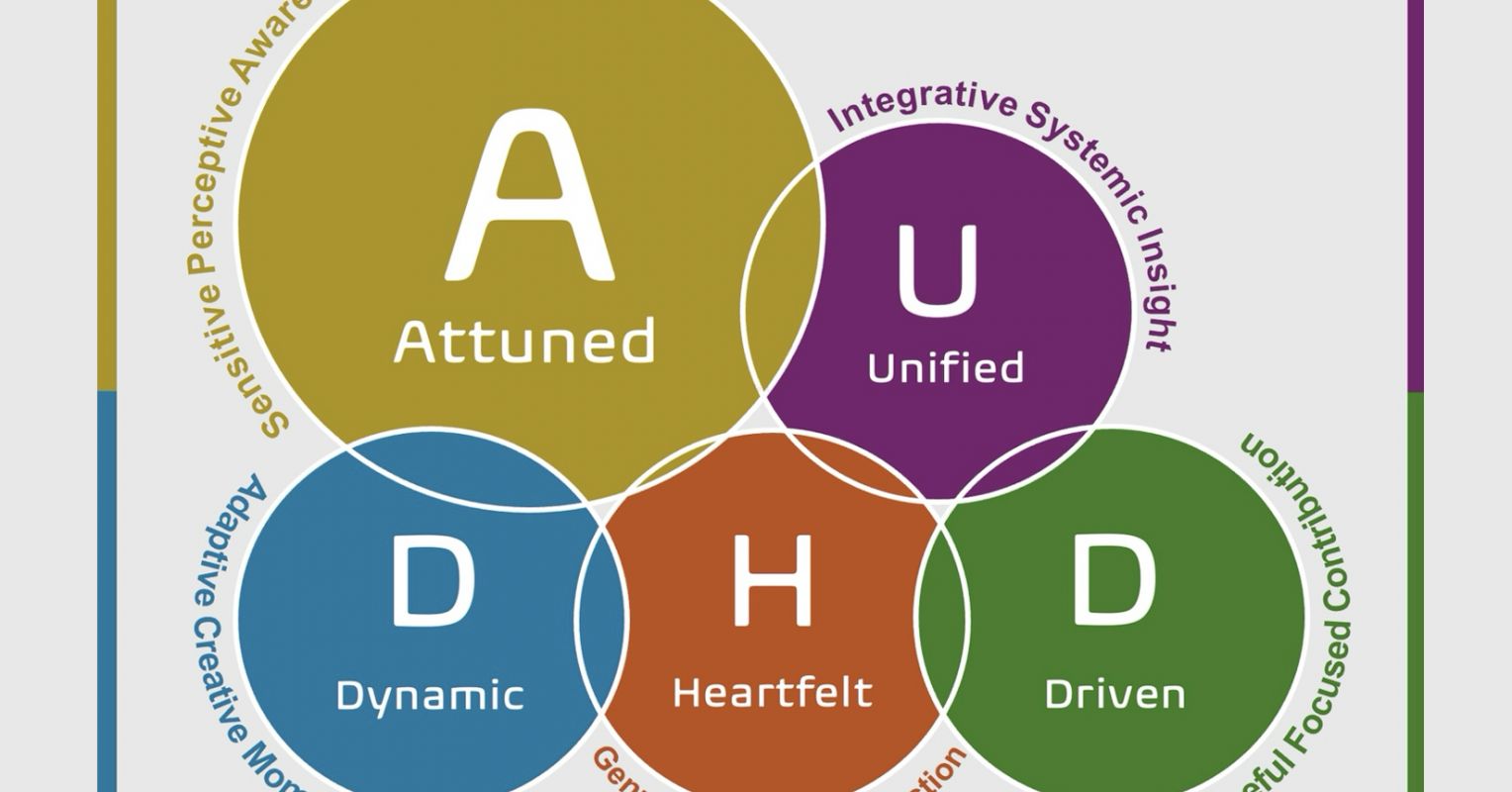
In my post Understanding Strengths With Coexisting Autism and ADHD (Storace, 2025), I described five interconnected strengths—ways difference can become depth: attuned, unified, dynamic, heartfelt, and driven. One of the most resonant, based on reader feedback, is the idea of being attuned—deeply perceptive, emotionally aware, and finely responsive to the world. This post extends that idea by exploring what it means to live as someone who is attuned internally and relationally.
Understanding “Attuned” as a Strength
In the context of AuDHD, being attuned means experiencing the world with heightened awareness. It involves noticing more and perceiving differently—such as sensing emotional shifts in a room, detecting patterns, or feeling environmental changes before others do. For many with AuDHD, this heightened sensitivity can be a double-edged sword. It fosters empathy and insight but can also lead to sensory overload, emotional overload, or social fatigue (Antshel & Russo, 2019). However, when this sensitivity is recognised as a strength, it becomes easier for others to respond with understanding rather than correction.
Four Dimensions of Attuned Experience
1. Emotional sensitivity and empathy
Attuned individuals often pick up on emotional undercurrents before words are spoken. While they may not always interpret these cues accurately, they notice shifts others overlook—such as changes in tone, micro-expressions, and slight hesitations. In relationships, this heightened awareness can translate into deep empathy and increased sensitivity to others’ needs. It can also lead to emotional overload when boundaries are unclear or when the environment is emotionally intense. Many individuals with AuDHD report that their emotional world feels “louder” to them (Antshel & Russo, 2019).
When nurtured, this emotional sensitivity becomes a gift, fostering genuine relational presence, ethical awareness, and authentic connection rather than surface-level exchanges.
2. Heightened sensory awareness
People who process sensory information deeply are often more aware of their environment, more sensitive to emotional and relational cues, and more likely to notice details and shifts that others miss. For many individuals with AuDHD, this depth of perception means that experiences such as sound, light, texture, and spatial layout don’t sit in the background—they actively shape how the body feels and how the mind responds.
A noisy classroom, harsh fluorescent lighting, or a busy open-plan office doesn’t just create distraction; it can increase stress, drain energy, and make it harder to think clearly or stay emotionally regulated. Yet this same depth of perception also supports heightened awareness, emotional insight, attention to detail, and a strong sensitivity to people and environments. Sensitivity, in this sense, reflects an attuned nervous system rather than a flaw (Mottron et al., 2006).
3. Observational insight and attention to detail
Attuned individuals often see what others overlook: patterns, inconsistencies, emotional undercurrents, and sensitive environmental cues (Craig et al., 2016). This observational capacity isn’t incidental. It often serves as the foundation for problem-solving, empathy, and creativity. In many instances, this becomes apparent early on—a child observing changes in a teacher’s mood, a young person identifying patterns in nature or technology, or an adult sensing shifts in group dynamics before they are visible.
4. Creative and intuitive thinking
Being attuned often aligns with intuition—not in the mystical sense, but as pattern recognition grounded in sensitivity and experience (Craig et al., 2016). This connection can enhance creativity across fields such as writing, design, analysis, therapy, science, and systems thinking. When people are encouraged to trust their intuitive reactions rather than suppress them, they tend to produce insights that are original, profoundly humane, and not easily replicated.
Attuned Strength in Education
In educational settings, attuned students often experience both deep engagement and deep vulnerability. They are highly sensitive to their environment and learn best in spaces that provide:
- Emotional safety
- Sensory stability
- Meaningful relational engagement
Many attuned learners struggle not because of intellectual limitations but because the environment is misaligned with how they process the world.
Attuned students often:
- Notice nuanced feedback from teachers (tone, body language, attitude)
- Experience heightened anxiety in unpredictable or emotionally unsafe classrooms
- Excel in areas requiring perception and nuance: psychology, music, literature, environmental sciences, visual arts, ethics, and social studies
- Struggle with environments that emphasise speed, noise, competition, or rigid standardisation
Practical Implications for Education
Educators can support attuned learners by:
- Creating calmer, predictable classroom environments
- Allowing quiet spaces for sensory regulation when overwhelmed
- Recognising emotional sensitivity as intelligence, not fragility
- Offering opportunities for reflective and creative learning styles, not just performance-driven tasks
Attuned learners often thrive in environments that value curiosity, safety, and meaning over control and conformity.
Attuned Strength in Employment
Rigid or overstimulating work environments can obscure how people with AuDHD notice team dynamics, register subtle changes, and respond thoughtfully to others. However, in the workplace, being attuned can become a powerful professional asset when recognised rather than suppressed. Attuned employees often:
- Sense team dynamics and interpersonal tensions early
- Excel in roles that require emotional intelligence, precision, or perception
- Bring ethical awareness and relational depth to collaborations
- Show strong capacity in fields like counselling, design, research, teaching, healthcare, creative industries, and strategic thinking roles
Practical Implications for Employers and Organisations
Supporting attuned professionals doesn’t require radical change—just informed adjustments:
- Offering sensory-considerate environments (quiet spaces, controlled lighting)
- Allowing flexibility in work arrangements when possible
- Valuing emotional insight as leadership, not softness
- Creating cultures where authenticity and psychological safety are real, not just stated
When attuned individuals feel secure and respected, their contributions often extend far beyond task completion—they enrich workplace culture, deepen human connection, and bring integrity to systems.
Depth, Connection, and Meaning
In my work alongside neurodivergent individuals, I see being attuned as more than a personal characteristic—it is a way of engaging with the world. It shapes how people perceive, connect, and respond, supporting emotional presence, careful observation, ethical sensitivity, and creative insight.
When this way of being is recognised and supported, attuned individuals don’t just adapt to the world—they help reshape it, bringing depth, care, and meaning to the spaces they inhabit. In that sense, being attuned is not merely a strength of AuDHD; it is a profoundly human capacity that reinforces the importance of connection, awareness, and compassion.

