

970x125
It is unusual for a head of government, especially a president of a great power, to share private messages with other world leaders publicly. Yet, that happened recently between the US President and several of his European colleagues. The chat in question was screenshotted and posted by US President Donald Trump to several prominent political figures. Among others, it includes French President Emmanuel Macron, Norwegian Prime Minister Jonas Gahr Støre and NATO Secretary General Mark Rutte.
The sensational release appears to be intentional to expose the private thoughts of European heads of government. It is obviously unusual to anyone with a modicum of common sense, which should prompt the question: Should we actually not be doing this? His bluntness is perhaps not unique in history, but its delivery — often abrupt and stripped of decorum — is what many consider a departure from presidential norms.
Beyond the character, the act is clearly linked to Trump’s ambition to acquire Greenland. A plan that emerged just several days after the controversial unilateral capture of Venezuelan President Nicolás Maduro by the US military under Operation Absolute Resolve at the capital, Caracas, on January 3, 2026. An operation that was neither approved by Congress nor mandated by the UN, which was followed by Trump’s announcement to run the country.
We can begin by drawing on the case of Venezuela. Throughout various administrations, presidents have conveyed justification for essentially any strategic moves. In Iraq, claims of weapons of mass destruction (WMDs) were officially the primary cause for the US and allies to topple the regime of President Saddam Hussein. The administration subsequently framed the mission as an effort to liberate the Iraqi people and bring democracy. Another instance: In Libya, civilian protection was used as the main rationale for NATO’s intervention, among other factors. The same goes with Venezuela: self-defense against narcoterrorist organizations was used to make the military operation sensible. The president himself blatantly and unhesitatingly admitted that the plan to abduct Maduro and control Venezuela was driven by the country’s tremendous oil reserves. For context, Venezuela is the country with the most well-known massive oil reserves worldwide.
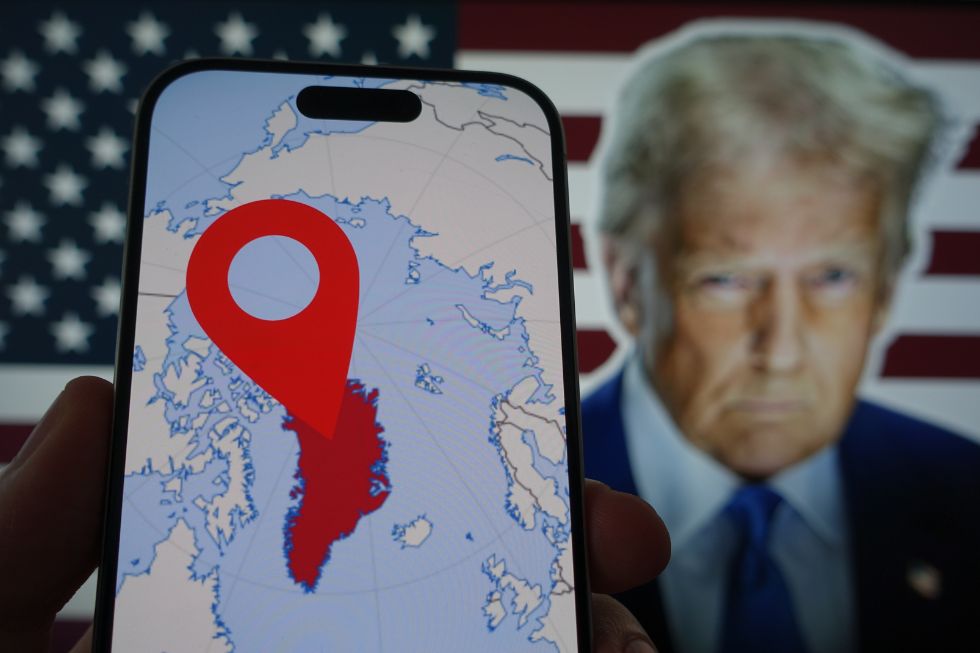
Fast-forward: these days record the ongoing dynamics of Trump’s quest to acquire Greenland.
Trump’s quest for ownership
The US recognized Greenland’s autonomy as part of Denmark when the kingdom sold the Danish West Indies (now the US Virgin Islands) in 1916, a fact worth noting. The document acknowledged Denmark’s sovereignty over Greenland. Furthermore, according to Marc Weller of the Royal Institute of International Affairs, the recognition was further solidified by the 1951 and 2004 Defense of Greenland Agreements with Denmark. These historical records debunk Trump’s claim that the territory is not part of Denmark.
Another logic playing out that Trump employs is that of national security. The president stated that Russia or China might take over the island. This claim depicts the large picture of Trump’s foreign policy, which can be defined, in a simplified manner, as two approaches. First, it is about securitization. The rationale is that adversaries of the US and its allies are planning to acquire Greenland; it is justifiable for the US to “own” Greenland. Despite this, it essentially is established upon an imperialist narrative: that if it was not up to us to occupy, others will do. The potential intervention might be for security reasons for the administration, but diminish territorial sovereignty for others.
Secondly, the focus is on the practical application of Trump’s worldview. Greenland, as an autonomous region under Denmark, is literally part of the EU and NATO. As Trump opens opportunities to acquire the island “the hard way” — clearly defined as options to authorize military operations — it will not only violate the international order, but also the establishment of NATO itself. Ironically, the US has service members present on Greenland, including in the currently-active Pituffik Space Base, indeed. At the moment, around 150 service members are on the ground in the island territory. Under past agreements, especially since the Cold War, the US, in fact, has quite extensive access to operate military personnel in the island territory.
If Russia and China are considered adversaries, the administration’s policy becomes even more questionable: why is there a failure to cooperate with NATO allies? Furthermore, what is the justification for the (suspiciously motivated) interest in acquiring Greenland for “protection”?
Furthermore, the security treaty is well-known throughout history for its collective defence in Article 5. That is, an armed attack against one member “shall be considered an attack against them all.” In the studies of institutional grammar, developed earlier by Sue Crawford and Elinor Ostrom, keywords like “shall” are obligatory. It implies rules that are essentially highly required. In the context of NATO, attacks against any of its members trigger the obligation for others to strike back. One could only imagine an alternate timeline where the North Atlantic Alliance is attacked by one of its own, even ironically, its historically founding member. Diplomacy seems no longer respected as a means of communication to settle interests; it is rather employed solely to pose aggressive behavior and push personal interests, despite other parties being at stake.
US hegemony and the future of multilateralism
Trump’s plan for Greenland, therefore, is ambiguous and paradoxical. It might seem unlikely and mind-boggling to come out of the head of government, even to some members of his administration. His “style” has been typical throughout these years, and this bully-esque foreign policy must be stopped at once.
Trump’s threats are leading to more countries, including American allies, embracing multipolarity. It also shows his contempt for international institutions. This is further evident from Trump’s decision to withdraw the US from various international organizations, marking them as “wasteful, ineffective, or harmful.” Multilateralism and the rules-based order, which has been the backbone and predominant narrative post-World War II, is unfortunately undermined by its own earliest creator. Figures in the administration, like Secretary of State Marco Rubio and Deputy Chief of Staff Stephen Miller, reflect an oddly imperialist voice that power matters most in foreign relations.
In addition, scholars have pointed out that this kind of foreign policy poses a danger to the international community. Be it the previous intervention capturing Maduro or intention to annex Greenland — through the “easy way” or “hard way” — by the US can provide precedents for other great powers: that such moves were in fact allowed and unsanctioned under international law: hence “we can do it too.” One could only project the potential scenarios occurring with the ongoing situation in Ukraine, with Russia, and the military prowess displayed by China toward Taiwan. It has been clear that democracies and a multilateral rules-based order may only function properly when leaders share common principles and respect them.
Therefore, what is there to expect? Opposition has come from members of Trump’s own party, who continue to put public pressure on him despite some being name-checked on his social media. Speaking of domestic pressures, for instance, Congress must uphold its function to oversee the executive from abusing power. Proposals from its members, like the one initiated in response to the military action in Venezuela, despite failing to pass to the Senate, are equally crucial to signal dissent against Greenland’s annexation.
The administration’s repeated violation of international law by executing an unlawful military action against Venezuela, let alone Greenland — its own ally and NATO member — should be addressed through these institutional measures. The approach is critical to not only affirm Congress’s war powers but to further ensure no further damage is done to the international community. It is a bipartisan issue more than ever.
The push for Greenland’s annexation also encourages a global reevaluation of the post-Cold War liberal international order and the ongoing reality of US dominance.
[Patrick Bodovitz edited this piece]
The views expressed in this article are the author’s own and do not necessarily reflect Fair Observer’s editorial policy.

