

970x125
I have worn noise-canceling headphones many times throughout my life. As an autistic diagnosed in early toddlerhood, I’ve relied on sensory accommodations across every stage of my life. So, when I settled into the stands for my first undergraduate football game at the University of California, Berkeley, I expected the technology to do its job. I expected relief from the roar of the crowd.
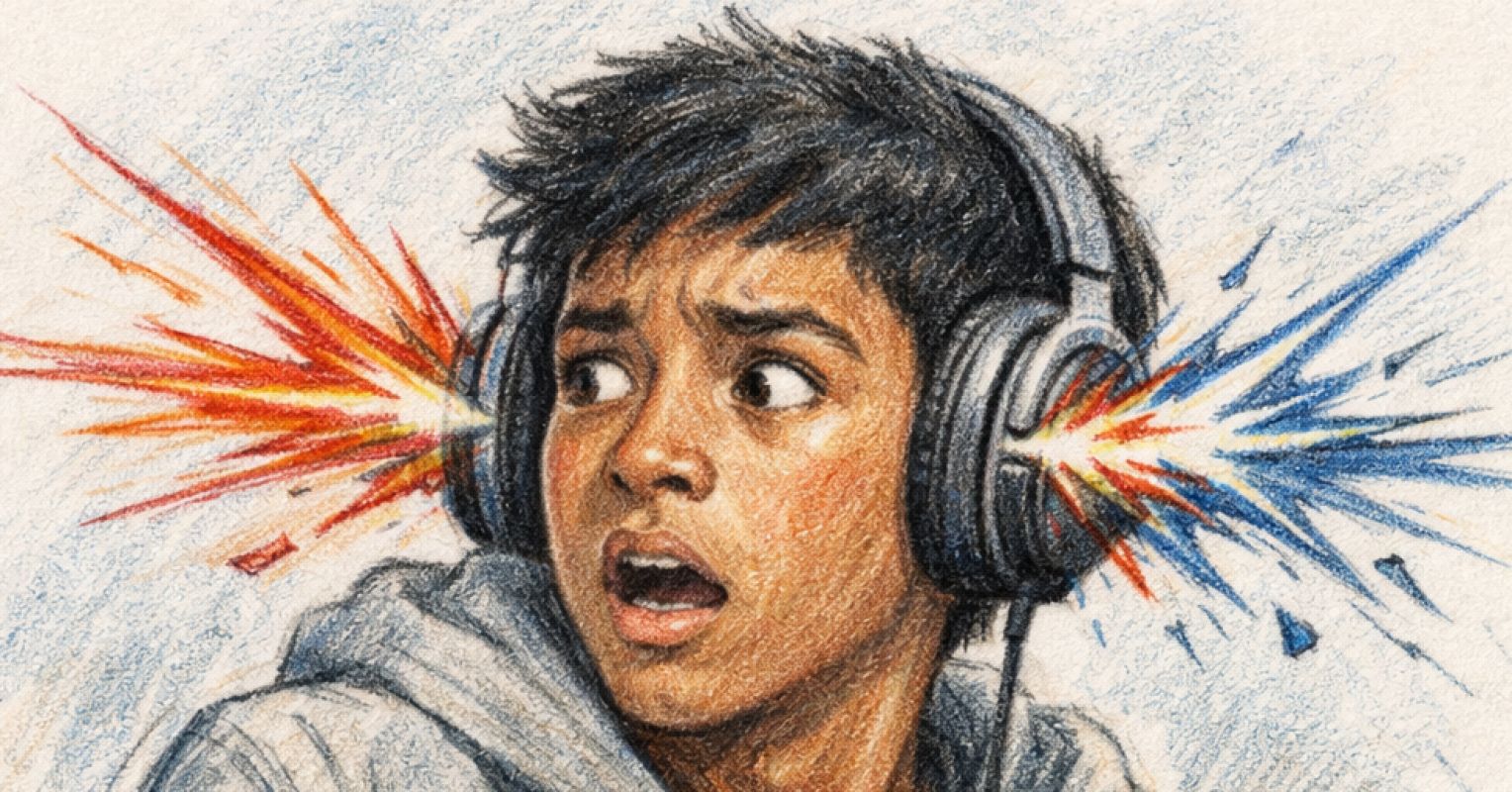
Then came the cannon shot.
At Berkeley football games, a ceremonial cannon is fired every time the team scores. When it went off, the blast cut straight through the headphones—amplified, sharper, and more jarring than anything I had heard without them. I got the fright of my life and came close to a meltdown. I’ve been wary of noise-canceling headphones ever since. That moment stayed with me not because it was loud, but because it was unexpected. The headphones didn’t fail because they were defective. They failed because the environment didn’t behave the way the technology assumes it will.
Active noise cancellation works by sampling environmental noise through microphones, analyzing its frequency and timing, and generating an opposing “anti-noise” signal. This process is highly effective for steady, low-frequency sounds that change slowly—airplane engines, traffic hum, the continuous drone of a crowd. It is far less effective for sudden, high-frequency sounds that arrive without warning. For abrupt sounds like a cannon blast, the noise arrives faster than the technology can respond.
I’m not opposed to technology. I’m wary of what happens when a single tool is mistaken for a universal solution.
Noise-canceling headphones can also change how noise is experienced rather than simply reducing it. By suppressing low-frequency background sound, they shift attention toward higher-frequency noise—speech, typing, sudden movements—that the technology cannot fully cancel. These sounds don’t necessarily become louder, but they become more prominent as the background fades. In some cases, the anti-noise signal itself can introduce subtle auditory artifacts or pressure sensations, making certain sounds feel harsher rather than softer. For autistic listeners, this can be especially destabilizing, because the sounds that remain are often the most unpredictable and socially demanding.
Which is why I paused when I saw the new Barbie released with noise-canceling headphones and an alternative communication device (AAC), widely celebrated as a breakthrough in autistic representation. The intent is clearly good. Representation matters. Assistive technology matters. AAC, in particular, is life-changing for many autistic people who communicate outside of speech. Even the flexible hands—designed to allow for stimming—are a thoughtful and welcome detail. Seeing that reflected in a mainstream toy is meaningful.
Still, the headphones gave me pause.
When I enter spaces that are supposedly “all autistic,” I often don’t see headphones everywhere—not because people aren’t struggling, but because sensory needs vary, coping strategies vary, and what helps in one context can make things worse in another. Some people prefer earplugs. Some rely on movement. Some need visual predictability more than auditory quiet. Some need social buffering rather than sensory dampening. Many use nothing visible at all.
The headphone has become a visual shorthand for autism. And shorthand always leaves people out.
It quietly reinforces the idea that the more visibly sensory-sensitive someone appears, the “more autistic” they must be, that autism is best understood, and managed, through equipment, and that accommodation looks the same for everyone. These assumptions flatten a spectrum defined not just by difference, but by variability.
There is also a harder truth beneath the symbolism. Adaptive technology is expensive. The more customizable and context-aware it becomes, the more it costs. Disabled people already face higher barriers to employment and income; the idea that inclusion is a consumer product, something you wear, buy, or upgrade risks shifting responsibility away from environments and onto individuals.
Noise-canceling headphones aren’t bad. For many people, in many settings, they are genuinely helpful. But they are not a universal solution—and they are a poor stand-in for understanding autistic sensory experience. Autism doesn’t need quieter people. It needs quieter assumptions. Inclusion isn’t about giving every autistic person the same tools; it’s also about building environments that don’t require armor just to participate.

