

970x125
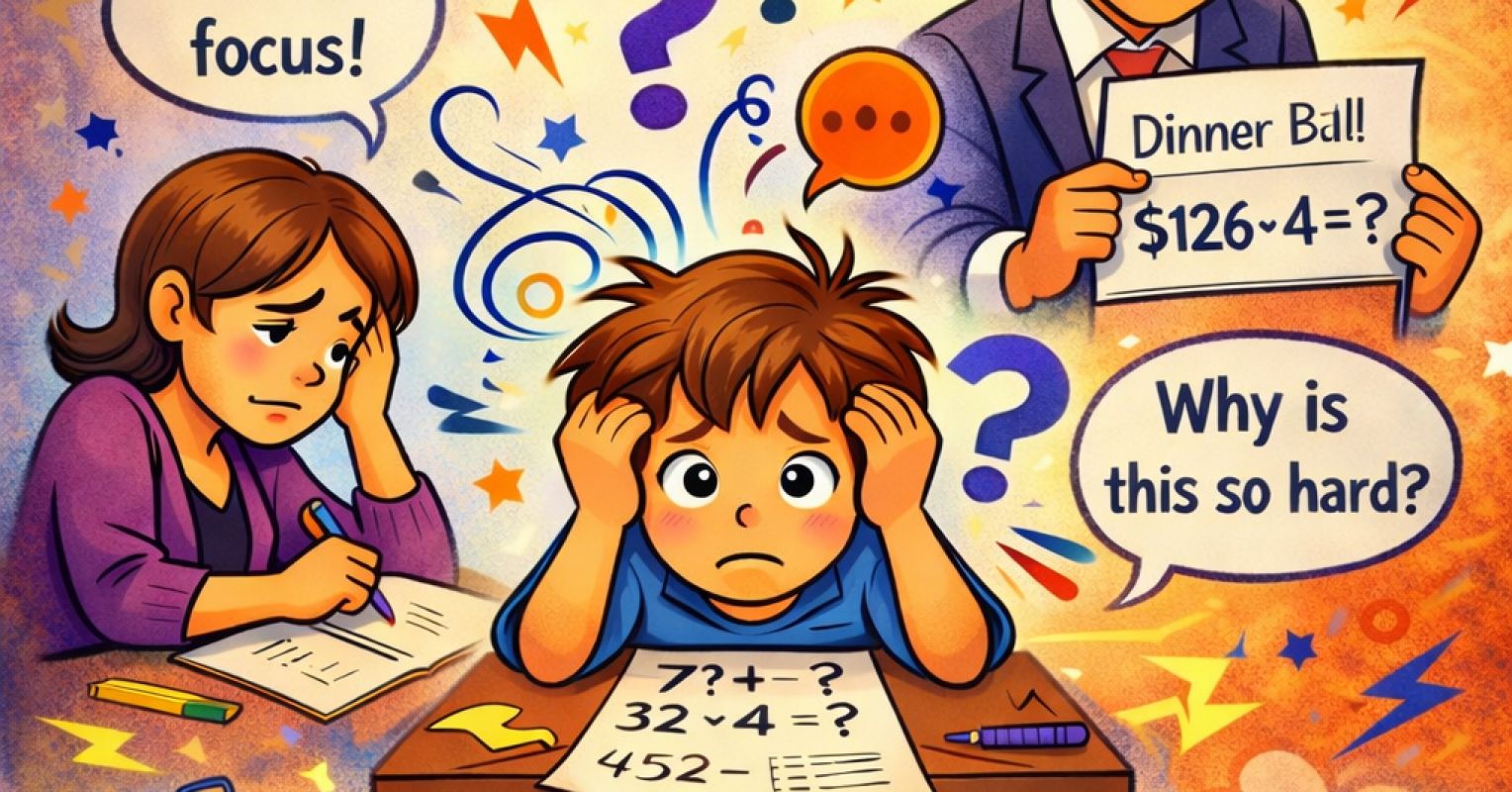
For many individuals, growing uncomfortable with mathematics often starts in early childhood when they receive a worksheet with numbers on it. At this point in life, there may be feelings of panic, such as “what do I do with these numbers?” or “I don’t know how to do this.” Many years later, these same feelings can come back, as when adults have to do simple things like divide a dinner bill or help their children with homework. There is a common phenomenon called math anxiety. It has nothing to do with the person’s intelligence; instead, it was developed due to the number of experiences that occur over time, as well as through social cues and the way our brains react to stress.
When Fear Takes Over Thinking
Anxiety changes how the brain functions. When someone feels under threat, even a small one, attention narrows. The mind shifts toward managing fear instead of solving problems. Math relies heavily on working memory, the mental space used to hold numbers and steps in mind. Anxiety competes for that space.
As worry creeps in, it pushes out the very information needed to finish the task. Simple problems suddenly feel impossible. Many people with math anxiety understand the material, but pressure interferes with access to what they know. When performance drops, it seems to confirm the belief that they are bad at math. That belief deepens the anxiety, and the cycle continues. The issue is not ability. It is the mental strain created by fear.
Where Math Anxiety Begins
We do not come into this world having fears concerning numbers; however, through the accumulation of repeated experiences involving discomfort, one will eventually develop anxiety concerning mathematics. For example, repeated uncomfortable experiences might include: being in an overcrowded/overly fast-paced classroom; being called to the board unexpectedly and getting the wrong answer; being tested under pressure; hearing teachers communicate that making mistakes is something people should strive to avoid and not learn from; and hearing innocuous comments made by adults (e.g., “I was never good at math”). These all help to reinforce the belief that mathematical struggle is synonymous with failure.
Cultural attitudes play a role as well. In many places, it is socially acceptable to laugh about being bad at math in a way that would feel strange if said about reading. Over time, this lowers expectations and encourages avoidance. People start to believe math skills are fixed, something you either have or you do not.
Parents can, without intent, contribute to math anxiety. By viewing situations involving their own or their child’s math homework with a sense of stress, adults convey to children through observable signs, such as body language, tone of voice, incited emotions (fear, anxiety), etc., that there is something negative about math. When adults express a pressured perception of math, children will naturally associate numbers with a sense of pressure, rather than becoming curious about learning more about math.
The Problem With Speed and Testing
Math is often taught as though it were a race. Quick answers are rewarded. Pauses are discouraged. For anxious learners, timed tests can be especially damaging. The ticking clock adds pressure and leaves even less room for working memory. A student may understand the concept perfectly, but freeze when time feels tight.
This emphasis on speed also misrepresents what math looks like in the real world. Outside of school, meaningful math is rarely fast. People double-check their work. They use calculators, software, and notes. They talk problems through with others. When classrooms value speed over reasoning, many students come to believe that they simply do not belong.
Stereotypes and Quiet Signals
Social stereotypes are one way that math anxiety develops. The fact that someone is aware of negative assumptions made about their group and their math ability causes fear that they will confirm these assumptions through their performance. The anxiety related to math has less to do with math as numbers and more to do with what someone’s success or failure at math reflects upon them. Even subtle signals can have an impact on how confident someone feels. Things like who appears in textbooks, teachers, and who gets praised for being “naturally good” at math are examples of the types of cues that create confidence.
Finding a Way Forward
Simple strategies, such as briefly writing down concerns about an upcoming exam, can create clarity in the brain. The way we teach also impacts a student’s success. Slowing a student down to decrease urgency to finish, keeping them focused on learning, and encouraging students to use different methods to validate their answers helps everyone to learn better, reduces pressure on the student, and allows them to see their progress. When the struggle with mathematics is normalized, students begin to build confidence. Adults can regain their comfort with mathematics by acknowledging and reframing their past experiences and by practicing in a low-pressure environment. Most importantly, we must change the way we talk about mathematics. Mathematics is not an indicator of a person’s worth or intelligence. Mathematics is a human invention that allows us to understand the world. The judgment that surrounds mathematics creates anxiety, and learning can be supported by patience.
Why It Matters Beyond School
Once you graduate, you will continue to experience mathematics anxiety. This will affect you in many ways, including career choice, financial decisions, and day-to-day living. You may choose not to take advantage of opportunities you would otherwise enjoy, due to your trepidation of using numbers or mathematics. Dealing with a tenacious fear of mathematics is not just about grades; it is about feeling confident and being in control of your life. Viewing math anxiety as stress-related, instead of as a flaw, makes it easier for us to understand it with compassion. Instead of asking, “Why do so many people have math fear?”, the important question to ask is, “Why do we expect people to learn math with an absolute lack of fear?”

